
1. Introduction
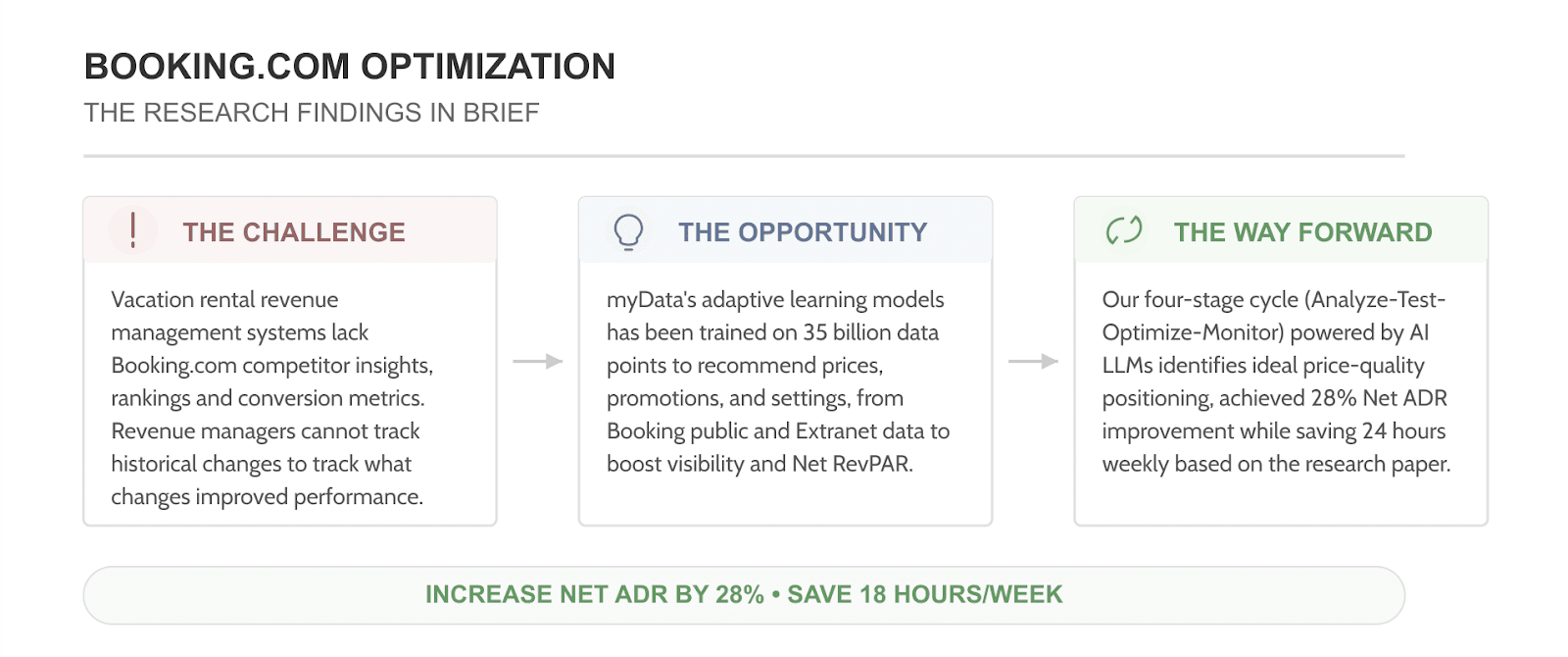
The research paper discovered that dynamic pricing alone only addresses 10-40% of the challenge in achieving optimal net RevPAR (revenue per available room/rental) described in section 6.2. This paper introduces an AI adaptive learning that provides revenue management recommendations by analyzing the complex, combined impact of competitors, content, pricing, and promotions using adaptive learning on 35 billion data points and a four-stage AI cycle (Analyse-Test-Optimise-Monitor). Early tests suggest this approach can explain 60-70% of optimal net RevPAR factors with Booking.com’s property ranking recommendation algorithm being the strongest lead indicator for explanation, and a 621 property 3 month study from January 1st to March 31st, 2025 which confirmed it delivered a 28% improvement in Net ADR while reducing workload by 44%, the revenue manager workload ~18 hours per week for the Booking.com optimization.
The remainder of this paper examines the Booking.com ranking engine in detail, describes the AI methodology developed, presents the quantitative results achieved, and discusses the practical application of these findings so that you can use these paper’s findings to improve your own properties performance.
2. The Problem: Why Current Revenue Management Falls Short on OTAs
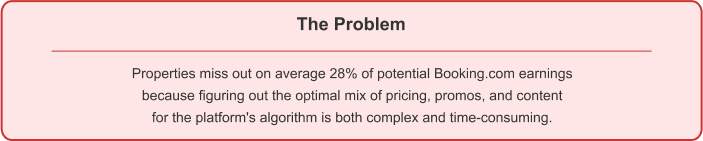
The short-term rental (STR) market is overwhelmingly dominated by a few Online Travel Agencies (OTAs), with platforms like Booking.com, Airbnb, Expedia, and VRBO collectively driving approximately 71% of global revenue (source Skift estimate). Mastering performance on these key channels is critical for success, yet current revenue management and optimization software often fails vacation rental operators due to several interconnected problems:
2.1 Lack of Granular Channel-Specific Optimization
Despite the unique algorithms and ranking factors of each major OTA, most standard software adopts a generic approach. There’s a significant failure, particularly among vacation rental operators, to optimize specifically for platforms like Booking.com. This includes a common misconception or disregard for how Booking.com’s ranking algorithm functions, even though search rank position is a primary leading indicator of a property’s channel performance and how well the property performs..
Many operators fail to recognize that optimization strategies must be tailored to each platform’s distinct ecosystem. What works for Airbnb may be ineffective or even counterproductive on Booking.com, given their fundamentally different ranking methodologies.
2.2 Over-Reliance on Insufficient Pricing Strategies
It’s important to recognize that dynamic pricing is a must-have foundation for any revenue management strategy, demonstrating an average revenue improvement of 15%+ for properties that implement it. This is because even generic dynamic pricing tools effectively detect basic supply and demand patterns in the market.
However, dynamic pricing alone is inadequate for maximizing performance across all OTAs. While necessary, the generic price adjustments generated by many tools fail to account for the complex, non-price factors influencing OTA ranking (e.g., listing quality scores, conversion rates, guest reviews, operational policies). All vacation rental dynamic pricing solutions are also primarily calibrated for Airbnb’s ecosystem rather than Booking.com, creating a significant blind spot for operators with multichannel distribution. This is a missed opportunity because booking.com accounts for more bookings in the EU & other countries. See section 3 for more detail.
Simply adjusting the price doesn’t optimize a property’s visibility or conversion potential effectively within each platform’s unique ecosystem. Furthermore, while rate parity remains a critical constraint, optimizing within parity across channels requires more sophisticated strategies than just price adjustments.
2.3 Focus on Lagging Instead of Leading Indicators
Current tools and management practices heavily rely on lagging indicators like revenue achieved or year-over-year comparisons. These backward-looking metrics often fail to capture current market dynamics (analysis suggests they explain only 20-30% of actual performance variance). This neglects crucial leading indicators that predict future performance and allow for proactive adjustments:
- Search rank position trends (this is a significant technical challenge to benchmark and monitor. See section 4.4 for more detail.)
- Listing view volume and click-through rates
- Conversion rates (view-to-booking)
- Real-time competitive positioning (pricing, availability, ranking)
Most systems fail to provide actionable insights based on these forward-looking metrics, leaving operators to react to outcomes rather than proactively influencing them.
2.4 Operational and Learning Deficiencies
Multi-Unit Challenges
Standard approaches often struggle to optimize performance effectively for individual units within a larger property portfolio on OTAs, failing to account for nuances that affect ranking and traveler appeal (e.g., optimizing different unit types for the large solo/couple traveler segment).
Lack of Historical Learning
Many systems lack the capability to track the specific impact of changes (e.g., price, text/image adjustments, policy updates) on key performance indicators over time. This prevents revenue managers from systematically learning what works and iteratively refining strategies based on data. Revenue managers cannot effectively track the impact of changes on KPIs for future booking windows (e.g., each day for the next 180 days).
Measurement and Benchmarking Limitations
Changes to listing elements (photos, text, pricing) cannot be properly benchmarked without accounting for multiple factors:
- Current promotions
- Seasonality effects
- Market supply and demand fluctuations
- Competitive set dynamics for specific date ranges
- Length-of-stay restrictions affecting search visibility
- Channel-specific demand patterns
- Only Booking.com has access to their guest/ users metrics
These complex, non-linear relationships must be measured holistically rather than in isolation. Year-over-year comparisons become unreliable without controlling for identical property setups and adjusting for seasonality to enable true apples-to-apples analysis.
Scalability Challenges and Lack of Time
The current approach to strategy benchmarking typically relies on spreadsheets maintained on an ad-hoc basis. This becomes increasingly impractical as portfolio size grows beyond 10 properties, as the manual effort required becomes prohibitively time-consuming. Monitoring the comprehensive set of KPIs necessary to improve revenue management tactics across multiple channels, while maintaining a particular focus on dominant platforms like Booking.com, requires more sophisticated systems than most operators currently employ.
3. The Short-Term Rental (STR) Market Landscape: Booking.com vs. Airbnb
Booking Holdings’ STR Rise: Achieving 80% of Airbnb’s Total Booked Nights for 2024 with 50% fewer Listings.
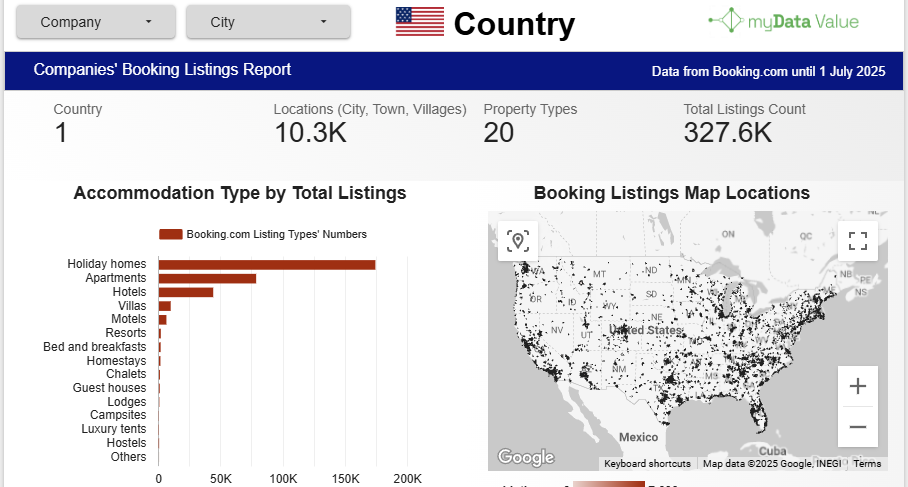
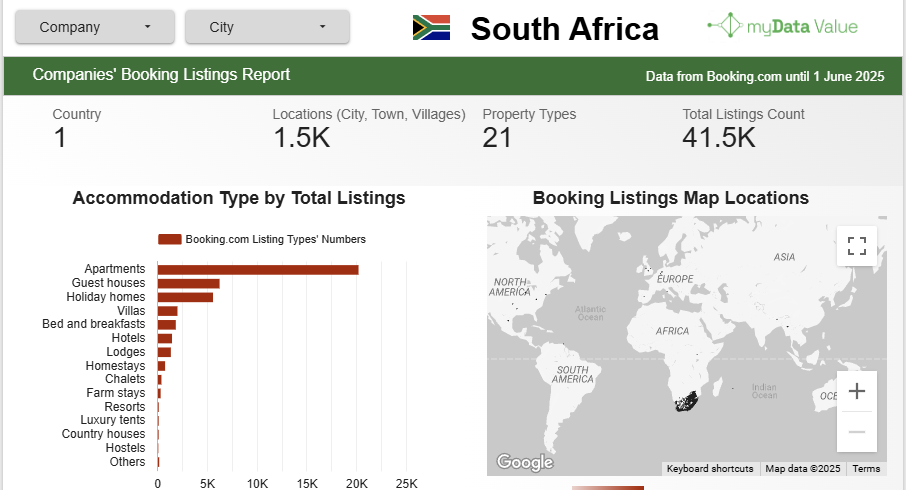
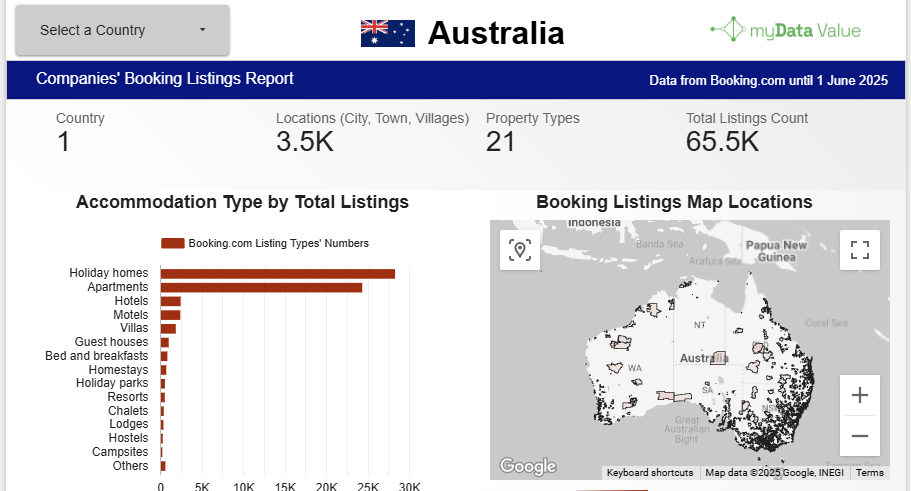
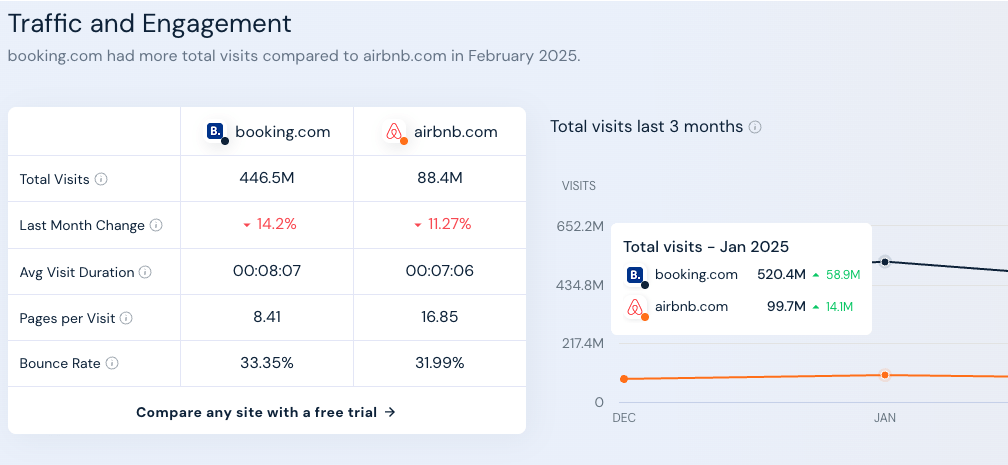
Globally, Booking.com attracts significantly more website traffic than its key competitors. This contrasts with the situation in the United States, where its traffic share is lower relative to Airbnb (ranging between 35% and 65%) and positions it closely behind Expedia. When assessing Airbnb’s global traffic, it’s important to consider visitors across its numerous country-specific domains (e.g., airbnb.fr, airbnb.ca, airbnb.co.uk). Combining traffic from these sources yields an estimated total of around 50 million monthly visitors for Airbnb globally. Even with this combined figure, Booking.com’s overall global traffic volume remains substantially higher, underscoring its dominant position worldwide.
The image below shows the web traffic for Airbnb only the US but Booking.com traffic is worldwide.
3.1 Booking.com (2024 Filling report numbers)
- Booking Holdings Group global Total Room Nights: 1.144 billion (9% growth vs. 2023’s 1.049 billion)
- Accommodation Mix:
- Alternative Accommodation: 35% in 2024 (up from 33% in 2023)
- Estimated Nights: 400.4 million nights (15.6% YoY growth)
- Listings: 3.5+ million alternative properties (up from 3.0 million in 2023, ~17% growth)
- Traditional Hotels: 65% in 2024 (743.6 million nights)
- Listings: Approximately 500,000 hotel properties
- Alternative Accommodation: 35% in 2024 (up from 33% in 2023)
- Efficiency: ~114 nights per alternative listing annually
- Source: Booking Holdings Q4 2024 SEC Filing
3.2 Airbnb (2024 Filing report numbers)
- Total Nights & Experiences: 491.5+ million (12% growth vs. 2023)
- Listings: 8+ million active listings (up from 7.7 million in Q4 2023, ~4% net growth after removal of 400,000 low-quality listings)
- Efficiency: ~61 nights per listing annually
- Source: Airbnb Q4 2024 Shareholder Letter and Airbnb Q4 2024 SEC Filings
3.3 Key Takeaways
- Growth Dynamics:
- Booking.com’s alternative segment grew faster (15.6%) than both its overall business (9%) and Airbnb’s growth (12%)
- Booking.com’s alternative listings grew at ~17% vs. Airbnb’s ~4% net listing growth (after removing 400K low-quality listings)
- Volume: Despite faster growth**, Booking.com’s alternative nights (400.4M**) remain below Airbnb’s total (491.5M) nights and experience bookings (estimating 5-10% experience bookings)
- Business Mix: Booking.com still derives the majority (65%) of nights from traditional hotels
- Efficiency: Booking.com generates nearly twice the bookings per alternative listing. It has to be taken into account that Booking.com is likely to have more room types per listing due to its multi-unit setup
Booking Holdings, primarily through Booking.com’s alternative accommodation segment, is strongly challenging Airbnb. Despite having significantly fewer listings in 2024 (around 3.5 million compared to Airbnb’s 8 million+), Booking.com generated 400.4 million nights in this segment. This equates to roughly 81% of Airbnb’s 491.5 million total nights and experiences booked, showcasing Booking.com’s much higher efficiency, achieving nearly double the nights per listing (~114 vs ~61). While Airbnb currently maintains a larger overall market share, particularly in the US, Booking.com’s alternative segment demonstrated faster growth in 2024 (15.6% vs. Airbnb’s 12%). This combination of superior listing efficiency and faster growth suggests Booking.com is well-positioned to potentially outpace Airbnb in the alternative accommodation space.
4. Understanding Booking.com: Guest Journey, Ranking Signals, and the Performance Funnel
4.1 Introduction: Booking.com’s Recommendation Ecosystem
Booking.com employs a sophisticated recommendation engine designed to connect guests with relevant properties efficiently, maximizing both conversions and user satisfaction. According to research from the paper “Beyond algorithms - Ranking at scale at Booking.com” (Mavridis et al.), the platform utilizes an adaptive machine learning approach that continuously evolves based on user interactions and booking patterns.
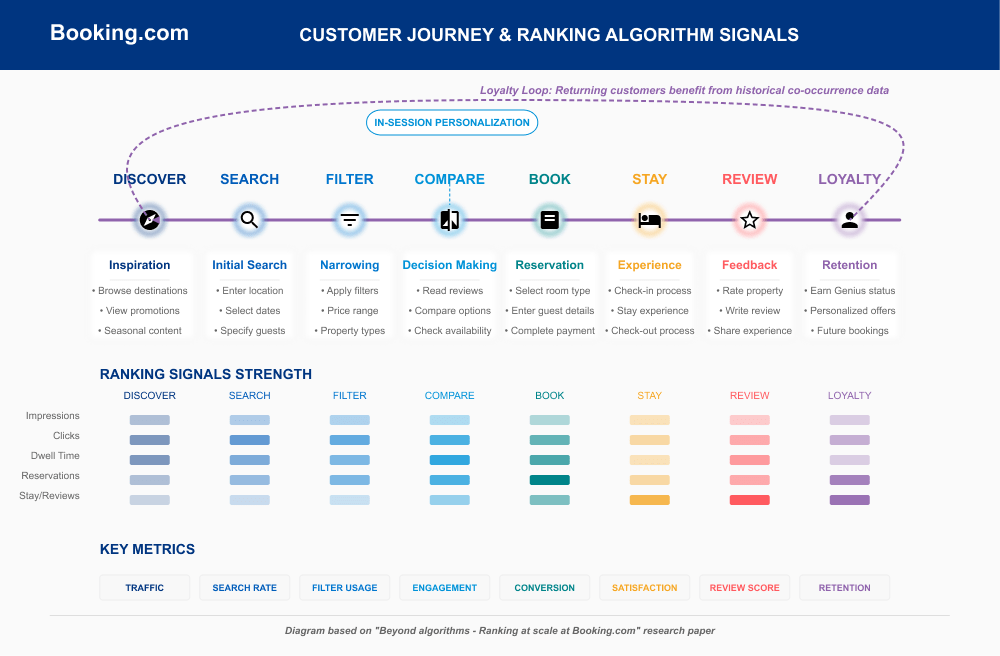
The guest journey on Booking.com follows a well-defined progression that directly influences the ranking algorithm:
- Discover: Users browse destinations, view promotions, and engage with seasonal content
- Search: Users enter location, select dates, and specify guest numbers
- Filter: Users narrow results by applying filters for price range and property types
- Compare: Users read reviews, compare options, and check availability
- Book: Users select room type, enter details, and complete payment
- Stay: Users experience check-in/out and their actual stay
- Review: Users rate the property and write reviews
- Loyalty: Users earn Genius status, receive personalized offers, and make future bookings
Understanding this journey is essential for revenue managers, as the algorithm collects signals at each stage to determine ranking position. Unlike simpler e-commerce systems, Booking.com’s algorithm must account for temporal sensitivity (booking windows), location specificity, and the high-consideration nature of accommodation purchases.
Technical Highlights:
Booking.com’s ranking engine is far from a monolithic algorithm, it is an ensemble of specialised machine learning models that operate collaboratively. Each model is designed to predict specific metrics such as click-through probability (pCTR), conversion likelihood (pCVR), and perceived quality, utilising thousands of input features drawn from user profiles, property attributes, and contextual factors. These models adeptly capture non-linear relationships, for instance, the intricate impact of price fluctuations and the diminishing returns of additional reviews, through methods such as Gradient Boosted Decision Trees, notably in the LambdaMART framework for learning to rank. The outputs from these distinct models are then integrated, often through a subsequent ensembling step or a final ranking layer that further refines the results by incorporating business logic elements like promotions and partner statuses, thereby delivering a highly personalised and conversion-optimised property listing to the user.
4.2 The Booking.com Search, Discovery, and Booking Process
Initial Interaction, Promotional Badges & Filtering Length of Stay property Ranking Impact
Users typically begin their journey by entering a destination, dates, and guest count. As shown in the image below:
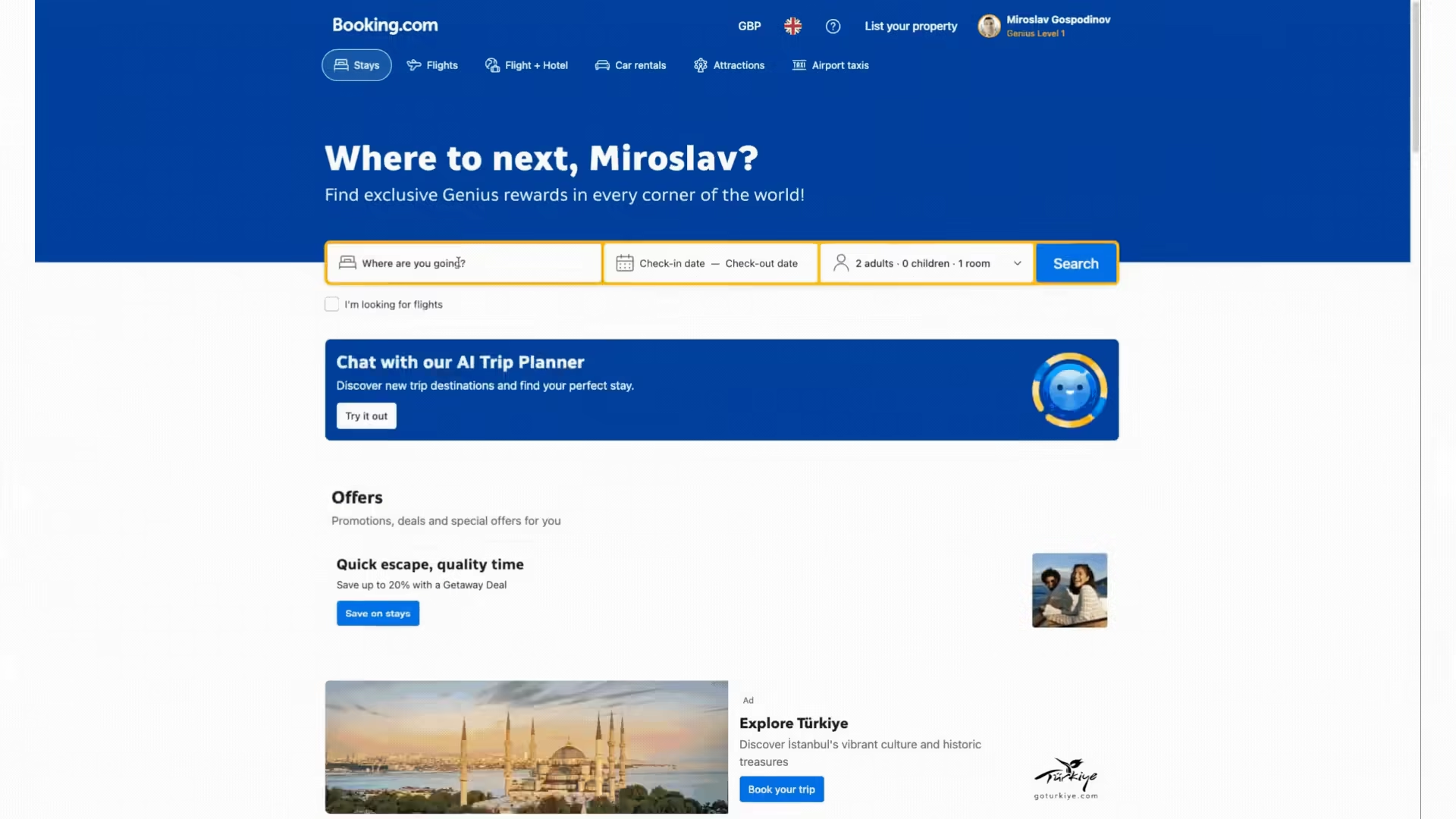
Booking.com prominently displays search filters for accommodation types, promotional offerings, and popular filters like price range, property type, and guest ratings. The platform immediately begins collecting signals about user preferences, with different patterns emerging across devices (mobile vs. desktop) and search parameters.
Research indicates that mobile users are significantly more likely to utilize map views and proximity-based searching compared to desktop users, though both groups heavily rely on Booking.com’s default sorting algorithm for initial navigation.
Map Usage, Popular Filters & The Power of Optimised Promotion for Ranking
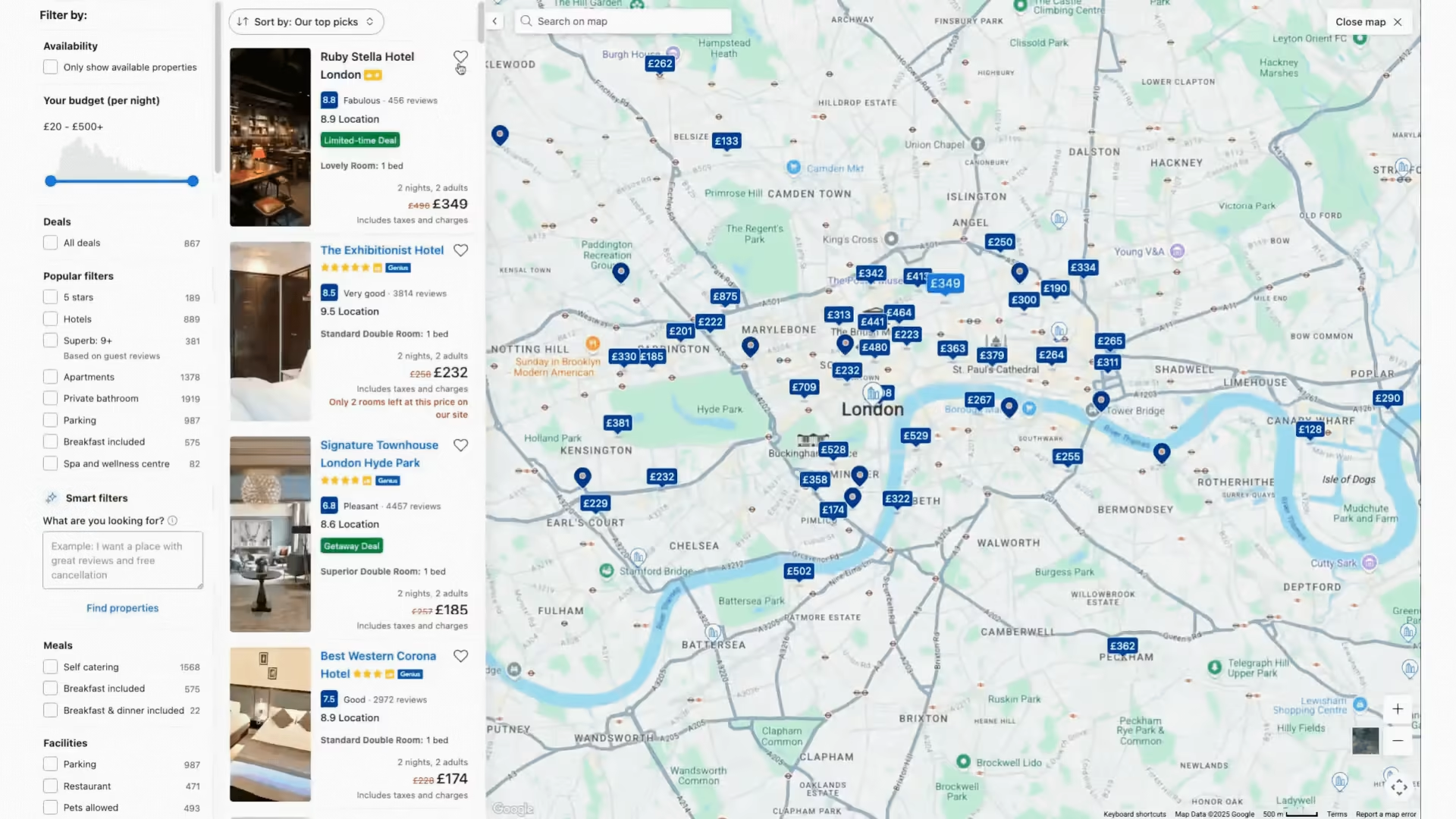
The map view (shown above) plays a crucial role in the decision process, particularly since it limits visibility to around 100 properties at any given time. Properties must cross this “visibility threshold” to be considered by most travelers. Within this view, users can filter for active or inactive listings and browse based on proximity to their desired location.
Importantly, as shown in the property listing image above, properties with moderate review scores (like the 7.1 “Good” rating seen here) can still achieve high ranking positions through strategic optimization. This property demonstrates how effective implementation of pricing strategy, promotional badges (Genius discounts), and rates can compensate for a less-than-stellar review score and the crucial importance of channel optimization that cannot be controlled with a simple dynamic price change.
Decision, Rates and Promotions Stack & Conversion Triggers
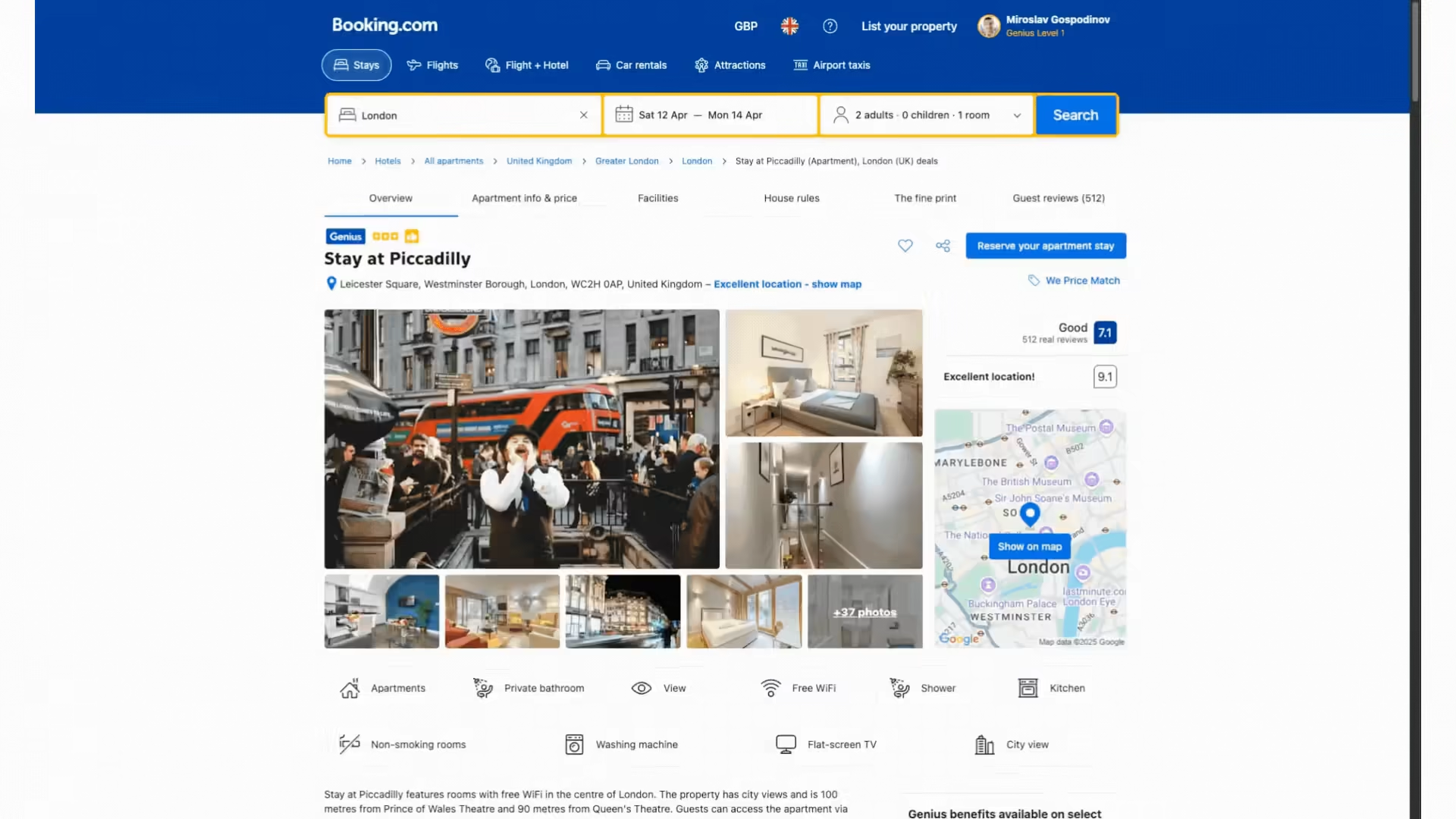
Once a user selects a property, conversion is influenced by multiple factors including:
- Visual presentation (quality and quantity of photos)
- Promotional elements (strike-through pricing, displayed discounts)
- Trust signals (review scores and counts)
- Value perception (quality relative to price)
- Special offers (Genius perks, promotional badges)
These elements collectively determine whether a property converts from a view into a booking, regardless of its absolute review score ranking.
Summary of the Guest Behavioral Context
Finally, monitoring performance requires understanding broader user behaviour on the platform:
- Most users still rely heavily on Booking.com’s default ranking algorithm.
- The map view is crucial for discovery, particularly for mobile users assessing proximity.
- The popularity of the “Homes & Apartments” filter creates an experience competitive with Airbnb, showcasing Booking.com’s diverse inventory and discount strategies.
- The Genius loyalty program plays a significant role in retention and influences rebooking patterns, indirectly affecting long-term performance signals.
These contextual factors underscore the dynamic environment within which property rankings fluctuate, making robust monitoring of leading indicators like the dual rank trend lines essential.
4.3 Modeling Performance: The Property Conversion Funnel
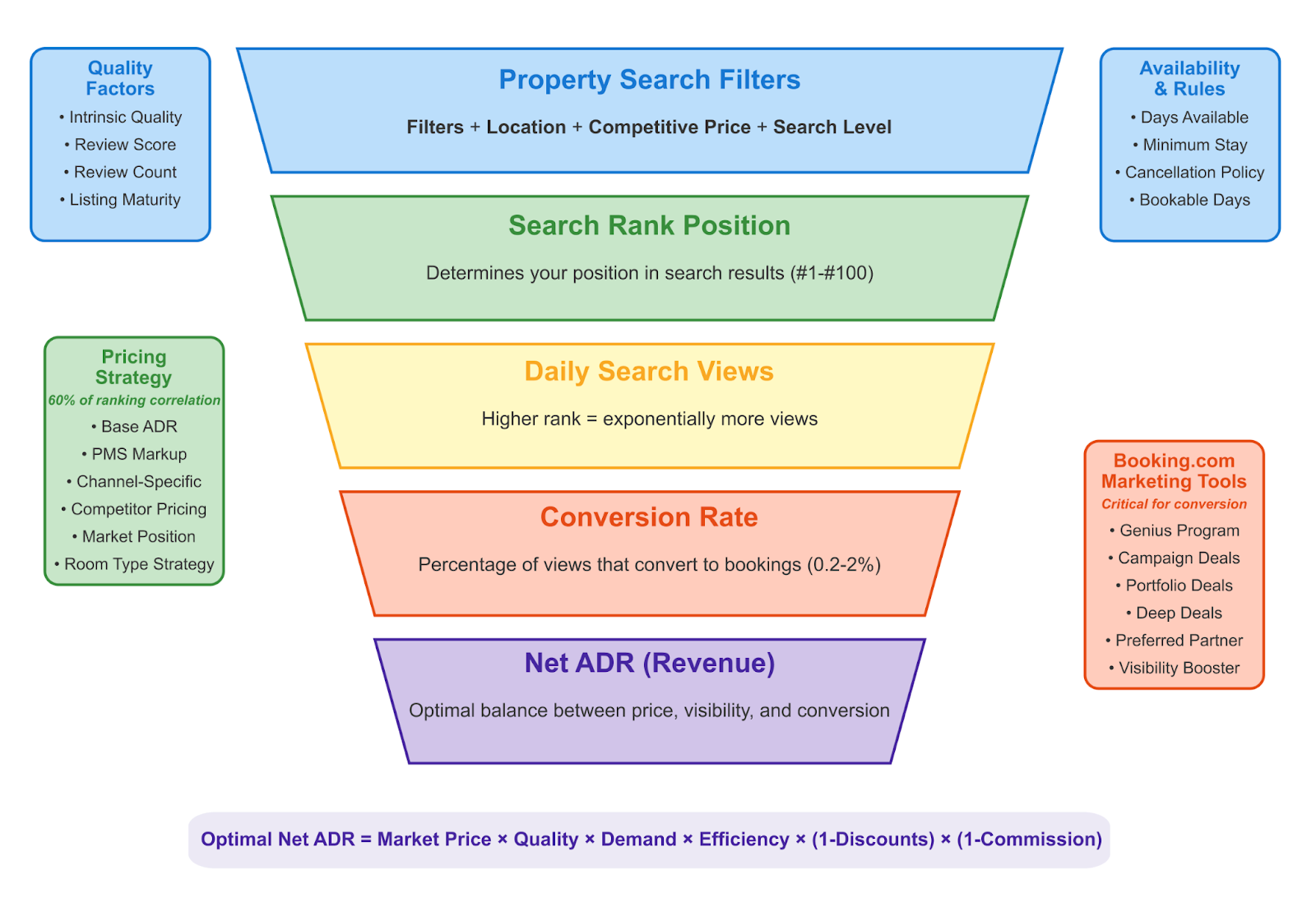
The Booking.com property performance funnel provides a framework for understanding how properties progress from initial eligibility to final revenue generation:
- Property Search Filters - Initial eligibility based on filters, location, and search parameters
- Search Rank Position - Determines visibility in search results
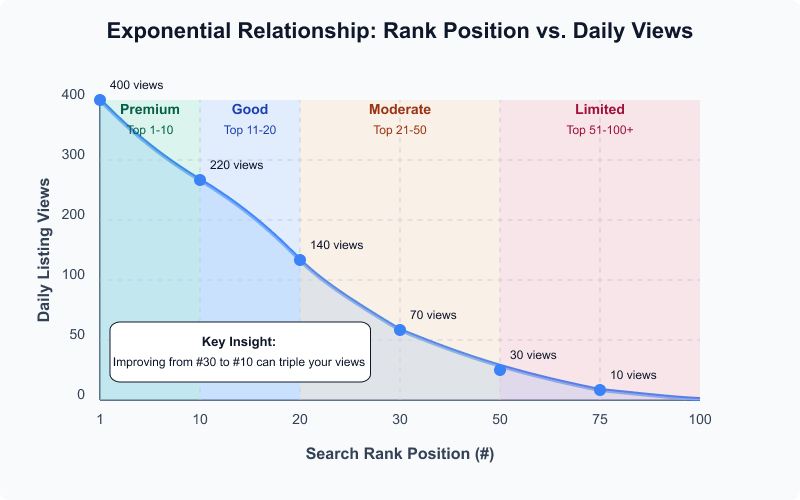
- Daily Search Views - Higher rank positions generate exponentially more views
- Conversion Rate - Percentage of views that convert to bookings
- Net ADR (Revenue) - The ultimate outcome that balances visibility, conversion and price
This funnel illustrates the critical relationship between ranking position and business outcomes. Properties must first achieve visibility (by ranking high enough to appear in relevant searches) before they can generate views, and subsequently convert those views into bookings.
Progression through this funnel is heavily influenced by the combined impact of:
- Content quality (photos, descriptions, amenities)
- Competitor positioning
- Pricing strategy
- Promotional offerings
- Historical performance metrics
The specific quantitative weights and impacts of these factors will be detailed in the Methodology and Results sections.
4.4 Monitoring Performance: Decoding Booking.com Rank Fluctuations as Leading Indicators - Dual Rank Trend Line
Our research confirms that tracking a property’s Booking.com search ranking position over time is the most powerful leading indicator of performance. It allows revenue managers to gauge the impact of strategic changes and understand algorithmic responses before they translate into lagging metrics like bookings or revenue. However, simple rank tracking often misses crucial underlying dynamics.
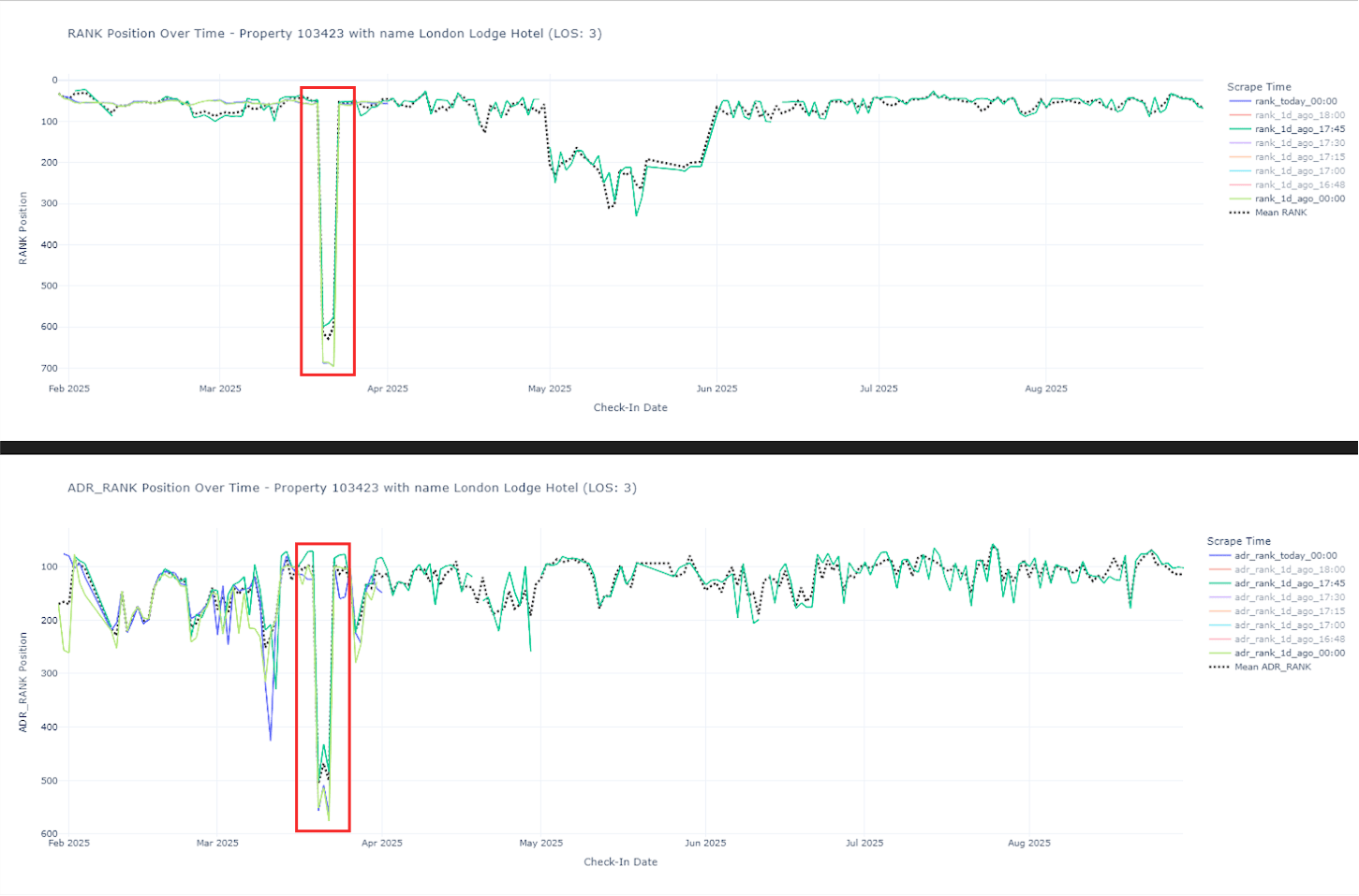
Observing Rank Sensitivity: The Price/ADR Connection
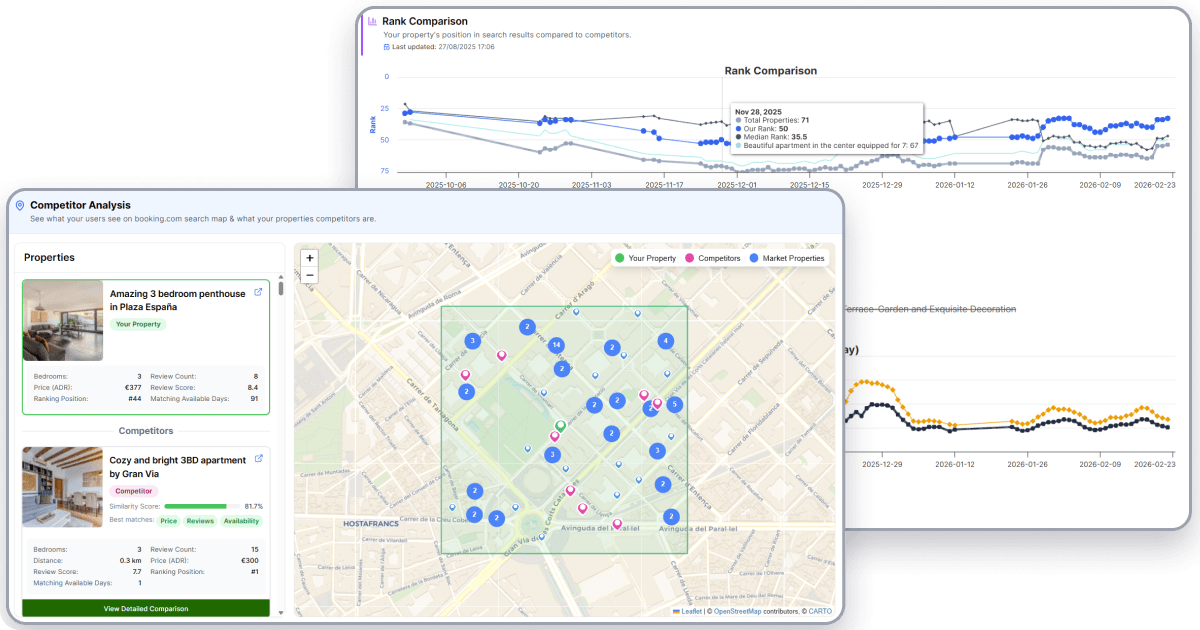
Detailed monitoring frequently reveals direct correlations between combinations of price, content, promotion strategies and rank. The image below illustrates this by plotting a property’s rank position against its relative ADR rank (or effective price) over a period. As demonstrated, increases in the property’s price often correspond with a noticeable, sometimes immediate, dip in its search rank, highlighting the algorithm’s sensitivity to price competitiveness as a key factor.
The image below shows Rank Position vs ADR Rank/Price over time, highlighting an instance where an increased price leads to a decreased rank
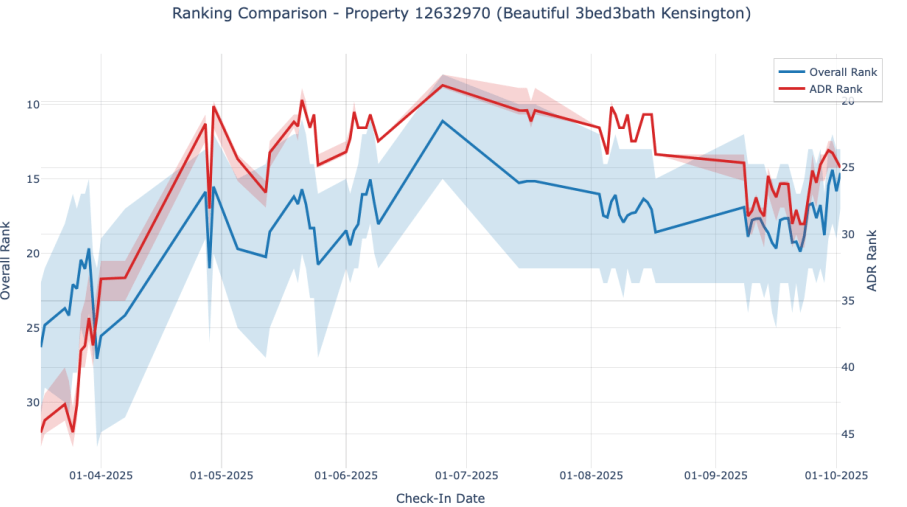
The image below plots Rank and Net ADR over several weeks, illustrating their fluctuations during this period. This means that, actually, the correlation is consistent over the period, and as a result, it will be inaccurate to track property performance without taking into account the ADR metric because the ranking or conversion explanation will likely have very low confidence.
Graph showing Rank Position (potentially both lines) and Net ADR over several weeks, highlighting correlations and divergences
Unveiling Complexity: Booking.com’s Dual Ranking Signals
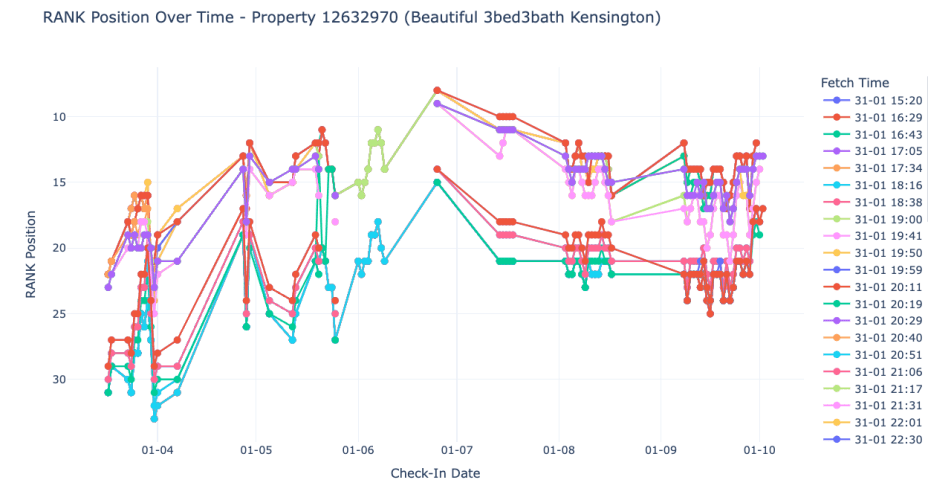
Further analysis reveals that a property’s visibility isn’t governed by a single, static rank trajectory. Our system uniquely tracks what appears to be two distinct ranking trend lines for the same property simultaneously, likely emerging from Booking.com’s continuous A/B testing methodologies and algorithmic exploration. The dual ranking image below shows an example of these two lines for one property. Their appearance can fluctuate, but tracking them reveals how they respond differently to combined or individual strategic changes (related to competitors, content, pricing, and promotions).
In this particular example, both ranking trend lines are correlated with the ADR real value change but this is not always the case, and one of the trend lines could be quite detached depending on the property performance and type.
The same listing ranking applies to multi-room-type units, such as hotels or aparthotels, that show the cheapest available property for the specific Booking.com filter, which could be included in the property strategy to control the guest interest.
Graph showing two distinct Rank Position trend lines for the same property over time
Interpreting the Trend Lines: Core Performance vs. Algorithmic Exploration
Observing these two trend lines over extended periods clarifies their likely functions. As the graph illustrates:
- One trend line (the Main - ‘ADR correlated Rank’) typically shows a stronger, more consistent correlation with the property’s Net ADR and the core ranking factors discussed previously (Quality Score components, strategic pricing/promotions, conversion efficiency). Its fluctuations often directly reflect deliberate optimization efforts or significant market shifts.
- The second trend line (the Secondary - Experimental Rank’) often exhibits more volatile, ad-hoc behaviour. It appears Booking.com uses this mechanism as part of an exploration strategy: temporarily boosting diverse properties (regardless of their current ‘core’ performance score) into higher visibility slots. This allows Booking.com to test guest engagement with different types of listings, gather data on new property-guest matches, and ensure variety in search results beyond just the consistently top-performing properties. These ad-hoc boosts are not necessarily correlated directly with the property’s recent changes or established performance factors.
Understanding and monitoring both trend lines provides invaluable insight. It allows revenue managers to differentiate between rank changes resulting from their own actions (reflected in the core line) versus temporary visibility boosts from Booking.com’s exploration tests (reflected in the second line). This capability to track and interpret these dual signals is crucial for accurately assessing strategy effectiveness and is not available through standard analytics.
Technical Highlights:
Our methodology for analyzing Booking.com’s ranking employs a data pipeline to process time-series ranking data scraped across various search parameters (e.g., length of stay, guest count, device type). Key technical steps include calculating relative performance ranks (for ADR, reviews) and utilizing machine learning, KMeans clustering on scaled rank data to identify and potentially separate dual ranking trend lines per property. This separation often maps to ‘main’ and ‘secondary’ trend line detection, reflecting Booking.com’s A/B testing, and is anchored by selecting a stable benchmark property identified through statistical scoring. The pipeline further correlates these distinct rank patterns with property ADR using Spearman correlation and incorporates anomaly detection logic to flag inconsistencies in scraped data by comparing rank, ADR, and property count shifts over time, thus providing deeper, quantitative insights into the complex output of Booking.com’s algorithm.
4.5 Key Takeaways: Strategic Optimization is Key to Booking.com Performance
As the preceding analysis shows, success on Booking.com stems from understanding the interplay between the guest journey, platform mechanics like map visibility, and the powerful influence of pricing and promotions within the ranking algorithm. The dynamics revealed by monitoring leading indicators, such as the dual ranking trends, highlight the inadequacy of simplistic approaches.
Therefore, this research concludes that proactive, multi-dimensional, and channel-specific optimization is essential. Achieving superior visibility and conversion rates hinges on strategically balancing quality signals, competitive pricing, and promotional tactics simultaneously, rather than relying on optimizing isolated metrics.
Having established the complexities properties must navigate, the following section introduces our AI-driven methodology designed to systematically analyze these factors and implement effective optimization strategies.
5. Methodology: Validating Performance Optimization with the “myData” AI Agent
Recapping the challenges outlined previously—the inadequacy of generic strategies resulting in a significant performance gap (only addressing 10-40% of optimal Net RevPAR potential), the complexity of Booking.com’s algorithm, the inherent difficulty of true benchmarking, and the observation of dynamic signals like dual rank trends—it becomes clear that a robust methodology is required for validation. This section details the “myData” AI LLM agent and the systematic approach it employs, demonstrating how its capabilities enable the reliable observation, measurement, and validation of these complex dynamics and the paper’s core problem statement. “myData” supplements existing revenue management systems, leveraging its foundation on a massive dataset (35 billion data points from Booking.com public and Extranet sources) which is crucial for identifying patterns and validating hypotheses at a scale impossible through manual analysis.
The 4-Stage Cycle: Framework for Systematic Validation
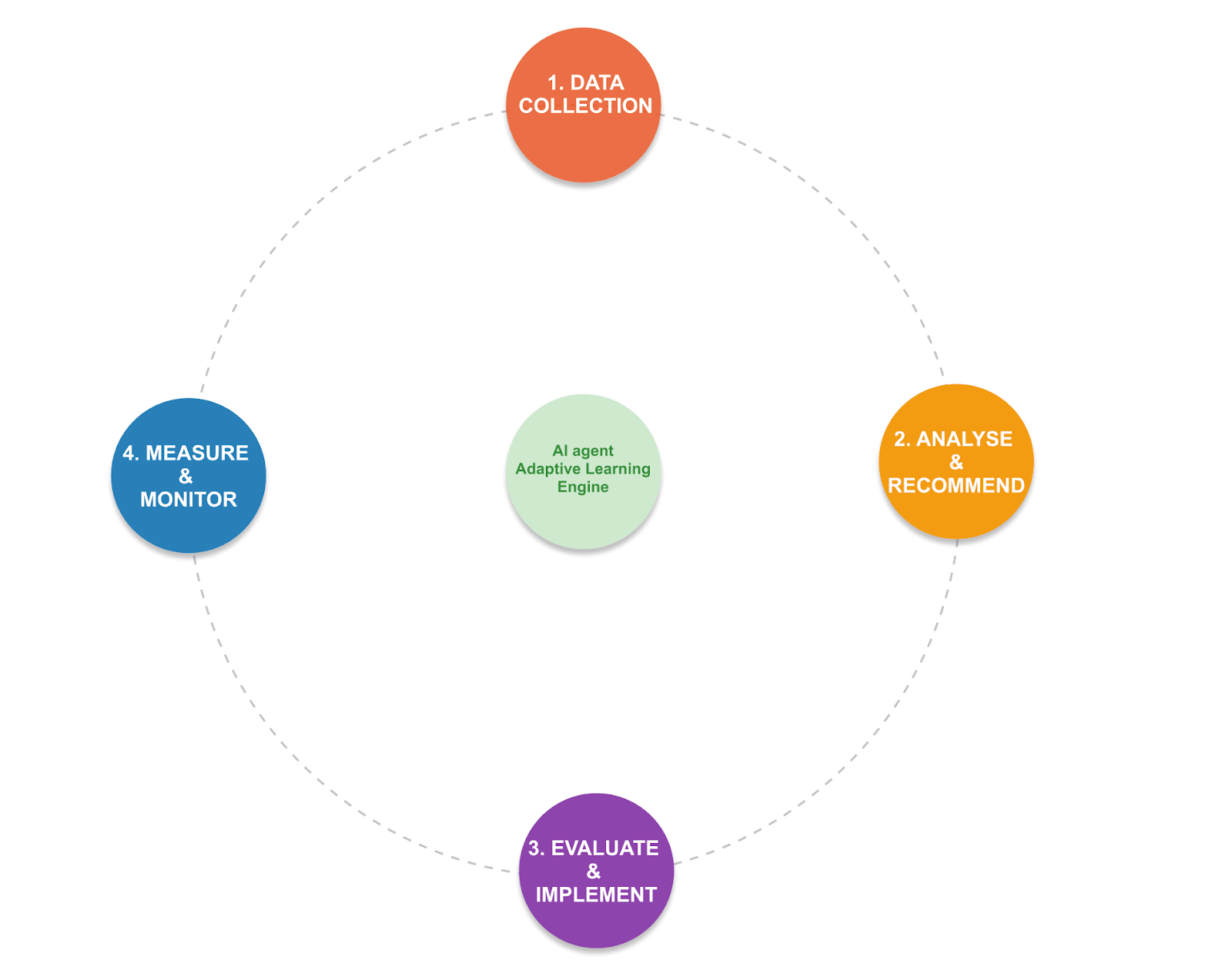
The “myData” AI agent employs a systematic four-stage cycle, DATA COLLECTION, ANALYSE & RECOMMEND, EVALUATE & IMPLEMENT, MEASURE & MONITOR, as its core methodology for rigorous validation of performance dynamics and hypotheses using real-world data and experimentation.
The most important question revenue managers are trying to answer is what should be each property idea Net RevPAR for the next 180 to 365 days.
Stage 1: DATA COLLECTION & Contextual Analysis:
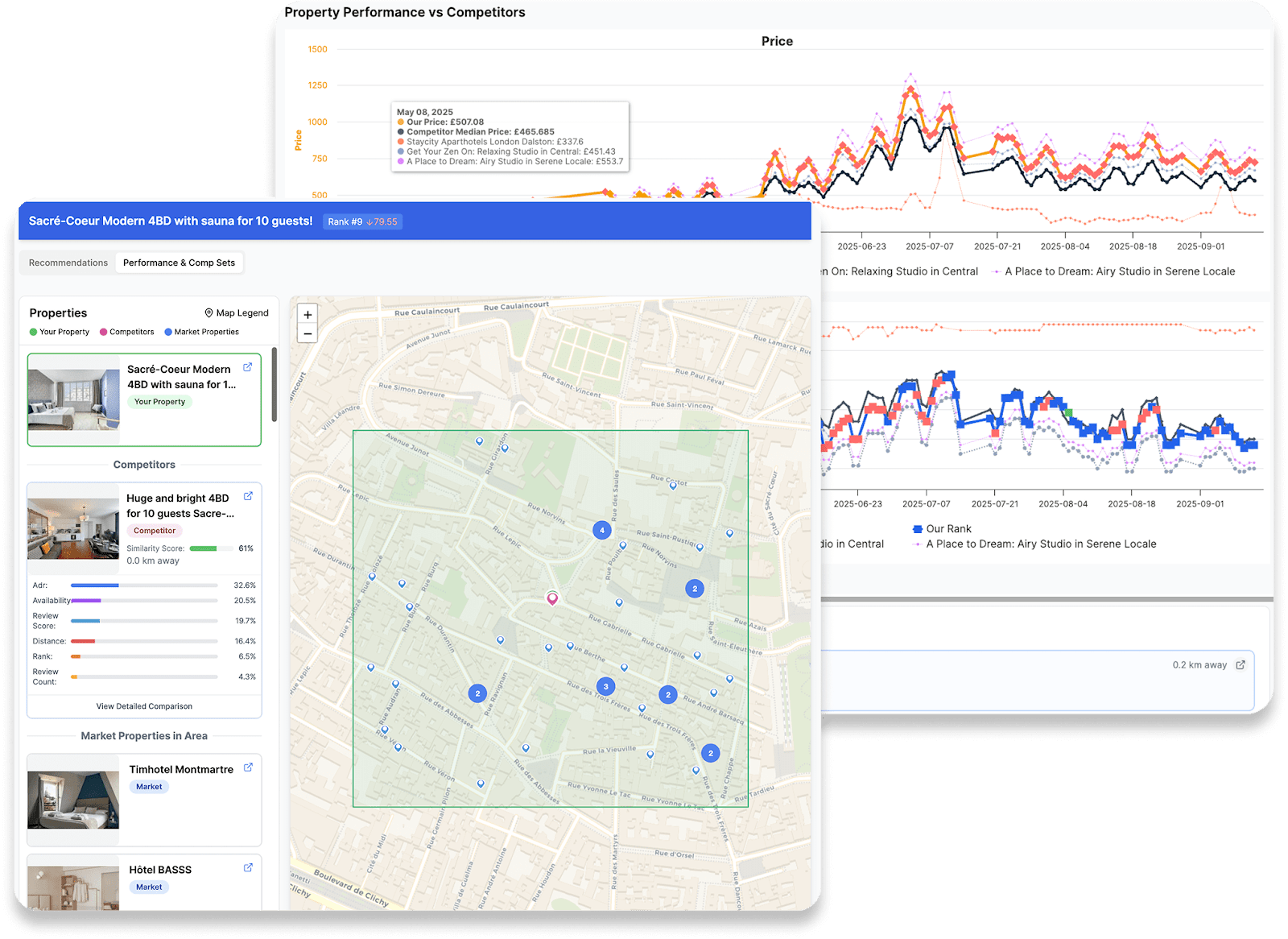
This foundational stage involves continuously gathering extensive, real-world time-series data for each property and its competitive set. This includes property settings (quality factors, reviews, availability rules, policies, pricing details like ADR/markups, additional guest charges), the active promotional stack (Genius, specific deals, visibility booster), and the dynamic market context (competitor data, seasonality). Crucially, during this initial data processing, the system technically distinguishes potential dual ranking trend lines per property, often reflecting platform A/B tests, using methods like K-Means clustering on scaled rank data relative to a statistically selected stable benchmark property. This comprehensive data capture, structured with separated rank signals, allows the AI to validate the baseline conditions and complexities necessary for accurate analysis and testing.
Stage 2: ANALYSE & RECOMMEND (Hypothesis Testing & Validation):
Using the comprehensive, structured data gathered in Stage 1 (including distinct rank trends), this stage focuses on diagnosing performance bottlenecks within the property booking funnel and validating targeted solutions through systematic experimentation. The AI first analyzes leading indicators to pinpoint weaknesses at each critical stage:
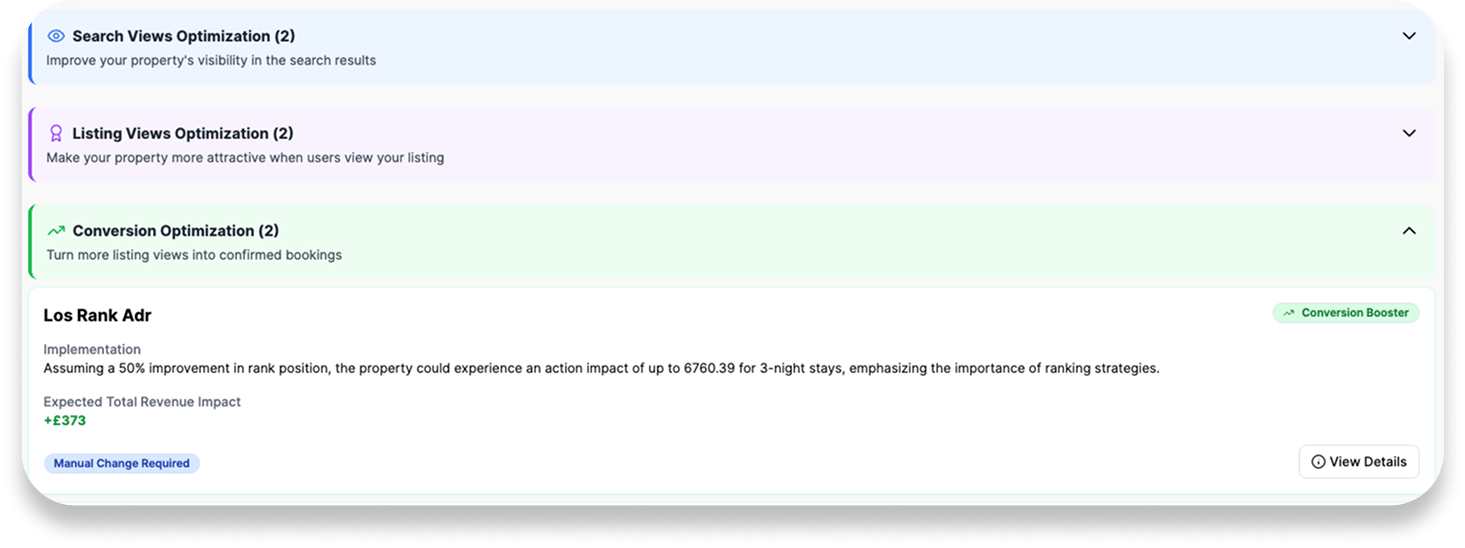
- Top-of-Funnel (Search Views Optimization): Assessing if the property gains sufficient visibility in relevant search results.
- Middle-of-Funnel (Listing Views Optimization): Evaluating if the listing is compelling enough to attract clicks when visible.
- Bottom-of-Funnel (Conversion Optimization): Determining if the property effectively converts views into confirmed bookings.
Based on this funnel-specific diagnosis, myData designs and executes controlled, platform-specific A/B experiments that compare different strategic levers (e.g., promotional combinations, pricing adjustments, content tweaks) precisely aimed at improving the identified weak stage(s). By isolating variables and monitoring leading indicators during these live tests, the system gathers empirical evidence validating the true, causal impact of distinct actions on specific funnel metrics (like rank, click-through rate, or view-to-booking conversion).
This rigorous analysis enables reliable benchmarking. Consequently, myData generates specific, actionable recommendations which are explicitly categorized by the funnel stage they address (e.g., “Search Views Optimization”, “Listing Views Optimization”, “Conversion Optimization”, as illustrated in the image below. These recommendations, often including expected impact estimates, are grounded in validated cause-and-effect relationships identified through the testing process, ensuring targeted and effective strategy adjustments.
Stage 3: EVALUATE & IMPLEMENT (Validating Optimization Potential):
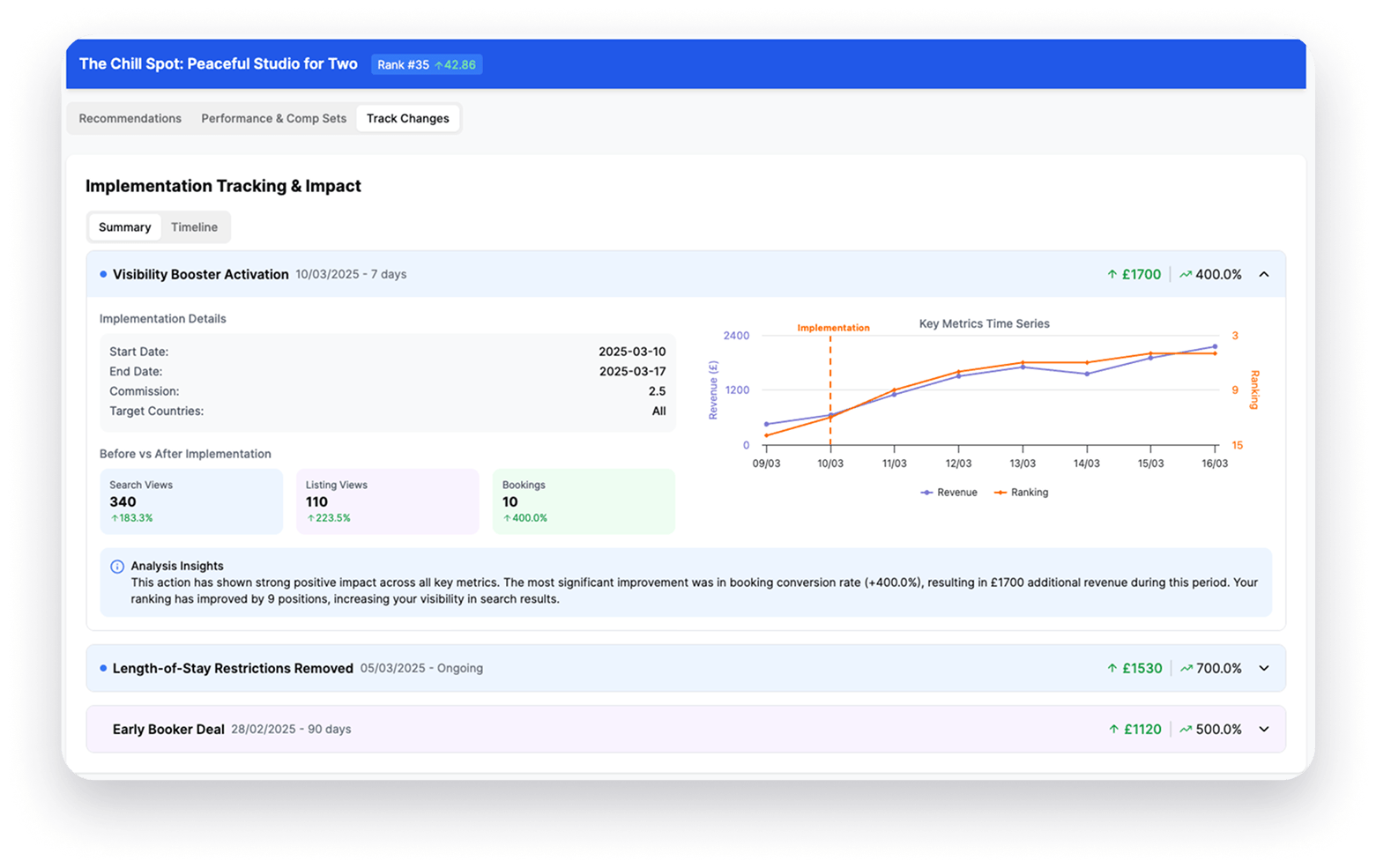
Leveraging validated A/B test insights from Stage 2, the myData AI evaluates optimal strategy combinations across competitors, market context, pricing, content, and promotions—automating complex analysis beyond manual tracking capabilities. It supports implementing tailored optimizations (considering property type, reviews, market factors) designed to balance visibility, conversion, and Net ADR effectively. Crucially, myData then validates the actual impact of these implemented strategies by meticulously tracking performance changes over defined periods, noting significant events like drastic price shifts. As shown in the image below showing the Visibility Booster evaluation, this precise tracking provides clear before/after metrics and trend analysis, confirming strategy effectiveness and demonstrating the significant potential (~60-70%) for data-driven performance gains.
Stage 4: MEASURE & MONITOR (Ongoing Validation & Refinement):
Continuous, automated monitoring provides ongoing validation of implemented strategies and facilitates adaptation to market shifts. myData tracks the full suite of leading and lagging KPIs, applying statistical analysis to continuously validate the dynamic relationships between rank trends (both main and secondary), Net ADR, conversion, and active strategies. Anomaly detection logic validates data integrity. Based on this validated performance tracking against goals or significant deviations, the system generates property and portfolio-level report summaries and can trigger automated notifications to revenue managers, ensuring timely awareness and response informed by reliable, validated insights. This constant measurement and reporting loop provides the foundation for trustworthy, adaptive revenue management.
The “myData” AI agent’s methodology—combining large-scale data analysis, a systematic 4-stage cycle emphasizing controlled testing and advanced monitoring (specifically of dual rank trends), alongside adaptive learning—provides the necessary scientific rigor. It allows us to move beyond observation or correlation to systematically validate the core problems of channel-specific optimization and benchmarking failures. This validated understanding of complex performance dynamics, confirmed through the AI’s capabilities, forms the basis for the results presented next.
Having detailed the robust methodology used for analysis and validation, the following section presents the specific quantitative results obtained through its application in a large-scale study.
Technical Highlights:
The “myData” AI agent engine utilizes a hybrid approach, combining robust machine learning models like XGBoost and Decision Trees models for predictive analytics on complex structured data such as non-linear relationships and timeseries data, with a Retrieval-Augmented Generation (RAG) Large Language Model for more accurate reasoning, contextual understanding, and recommendation generation. Both the predictive models and the RAG system are trained and continuously informed by billions of data points encompassing market dynamics, competitor behaviour, and platform specifics. Crucially, these models are specifically fine-tuned for the nuances of the short-term rental revenue management domain, ensuring highly relevant and actionable outputs for optimizing performance on platforms like Booking.com.
For the 621-property 3-month study, we collected 35 billion data points using automatic bot scraping of Booking.com’s public website and also an internal Chrome extension that our users install which has ‘elevated’ privileges to take the user’s cookie and make authenticated requests with it (with their permission). This allows us to access our users’ private data as well from the Booking.com extranet which is important for leading indicators.
6: Results: Performance Improvements with AI Optimization
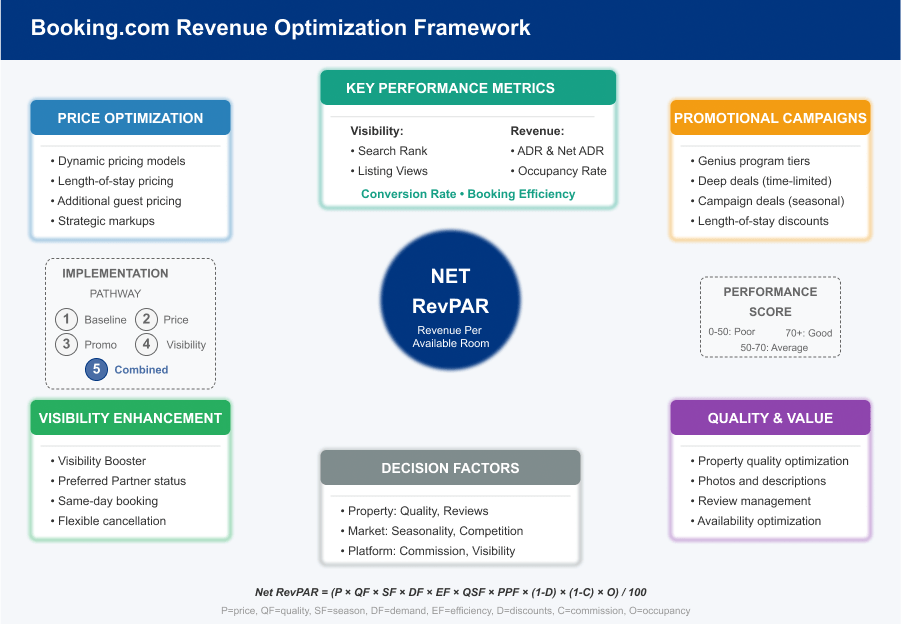
Effectively optimizing revenue on a complex platform like Booking.com requires a holistic and structured approach. This section presents the Booking.com Revenue Optimization Framework (see Figure X), a model developed to provide clarity and direction. Centered around the goal of maximizing Net RevPAR, the framework integrates the crucial Key Performance Metrics to track, the various Optimization Levers revenue managers can adjust (from pricing and promotions to visibility and quality), and the essential Decision Factors that influence strategy. By understanding these interconnected components, revenue managers can approach Booking.com optimization more systematically and effectively.
6.1 Study Overview and Methodology
Our study analyzed 621 properties across various market segments over a three-month period. This study analyzed the performance of 621 properties, representing diverse market segments, over a three-month period from January 1st to March 31st, 2025. To rigorously evaluate the impact of the myData AI agent, a controlled experiment was conducted. The properties were randomly assigned to one of two equally sized groups (approximately 50% each):
- Control Group: These properties operated without any optimization changes applied by the myData system throughout the study period. Their performance serves as a baseline reflecting standard operation or existing management practices.
- Treatment Group: These properties were actively managed by the myData AI agent. The AI utilized its adaptive learning capabilities and the four-stage cycle (Data Collection, Analyse & Recommend, Evaluate & Implement, Measure & Monitor) to apply channel-specific optimizations. Based on its analysis of leading KPIs, strategic changes (related to pricing, promotions, content, etc.) were implemented every 7 days.
To ensure valid comparisons between the groups and isolate the effect of the AI intervention, all performance results presented in the following sections have been normalized for seasonality using market-level indices derived from historical data. Furthermore, for analysing results across different starting performance levels, the entire initial cohort of 621 properties was categorized based on baseline metrics into Underperforming (31%), Standard (56%), and Outperforming (13%) segments.
6.2 Defining and Tracking Optimal Performance: The Net RevPAR Formula and Performance Score
- Our research into optimizing Booking.com performance yielded two key conceptual frameworks for understanding and measuring success: the theoretical target defined by the Optimal Net RevPAR formula, and a practical metric, the Property Performance Score, designed to track progress towards that target using key indicators.
- First, based on analyzing the complex interplay of factors across the 621-property dataset, we derived an Optimal Net RevPAR formula that encapsulates the key drivers of maximized, sustainable revenue on the platform:
Optimal Net RevPAR = (P × QF × SF × DF × EF × QSF × PPF × (1-D) × PS × (1-C) × O) / 100
(Where P=price, QF=quality, SF=season, DF=demand, EF=efficiency, QSF=quality score, PPF=partner status, D=discounts, PS=property score, C=commission, O=occupancy)
- This formula represents the theoretical peak performance, integrating critical elements from property quality and pricing (P, QF, QSF, PS) to market conditions (SF, DF), operational efficiency (EF, O), and platform participation (PPF, D, C). Our analysis indicates the weights of these factors vary by property segment, with visibility levers (DF, PPF) being more crucial for underperformers, while quality and rate factors (QF, P, QSF) are key for outperformers.
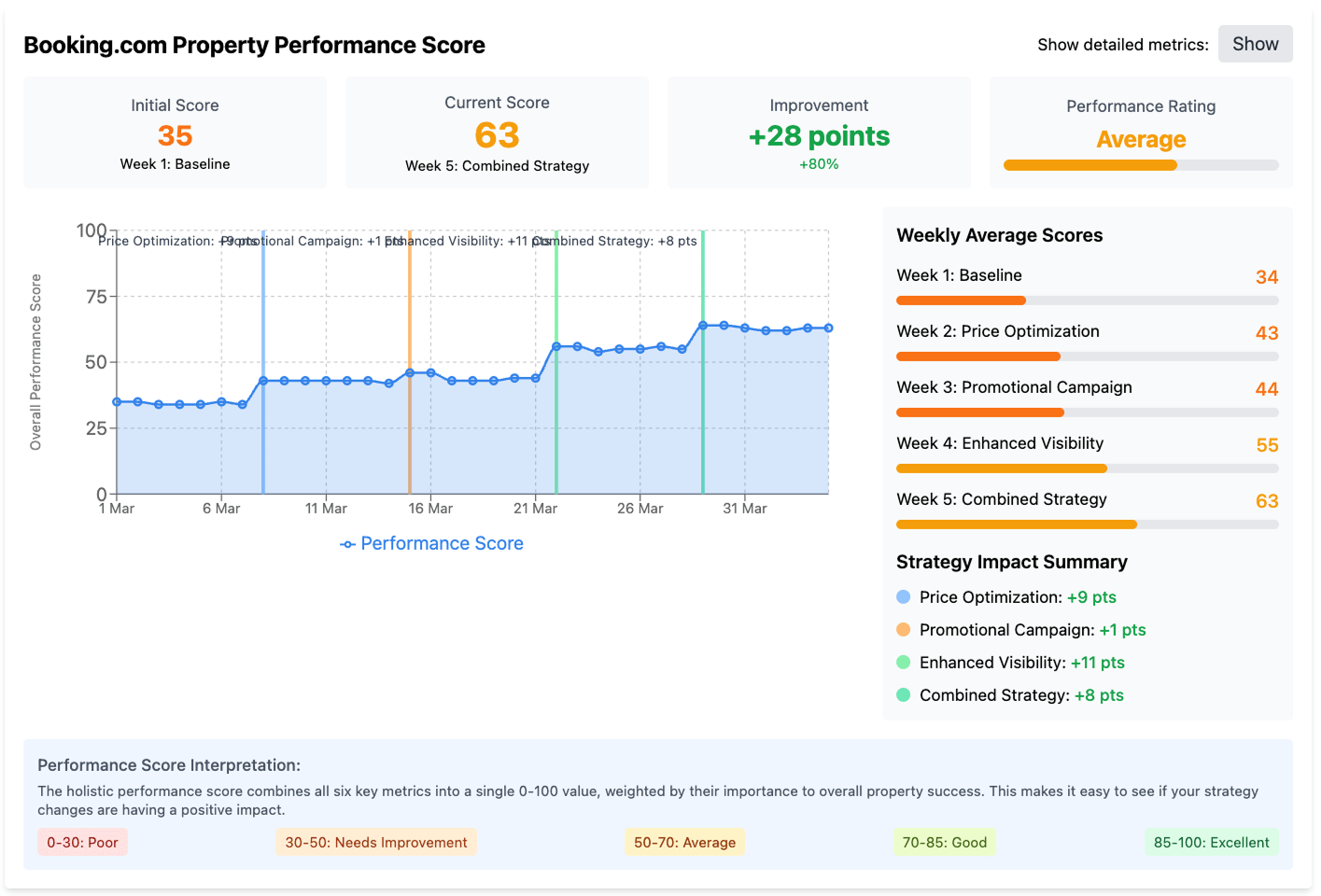
- While the formula defines the ideal target, achieving it requires tracking progress effectively. To this end, we developed the Booking.com Property Performance Score, illustrated in the image below. This holistic score (0-100) aggregates multiple leading and lagging Key Performance Indicators (KPIs)—such as Search Rank, Listing Views, Conversion Rate, ADR, and Booking Efficiency—into a single value, weighted by their importance to overall property success. As the figure demonstrates, this score provides an intuitive way to monitor performance over time, visualize the impact of specific strategic interventions (showing weekly score improvements from ‘Baseline’ through various optimizations), and benchmark current performance against defined ratings (Poor to Excellent). By optimizing this tangible Performance Score, which tracks the crucial underlying KPIs, revenue managers can systematically navigate the complexities of the platform and demonstrably work towards achieving their optimal Net RevPAR potential.
6.3 Data Analysis: Feature Importance and Correlation
Optimizing performance effectively requires understanding both which factors individually drive success and how different operational metrics interact, even if the underlying relationships are non-linear. Our analysis provides insights into both areas:
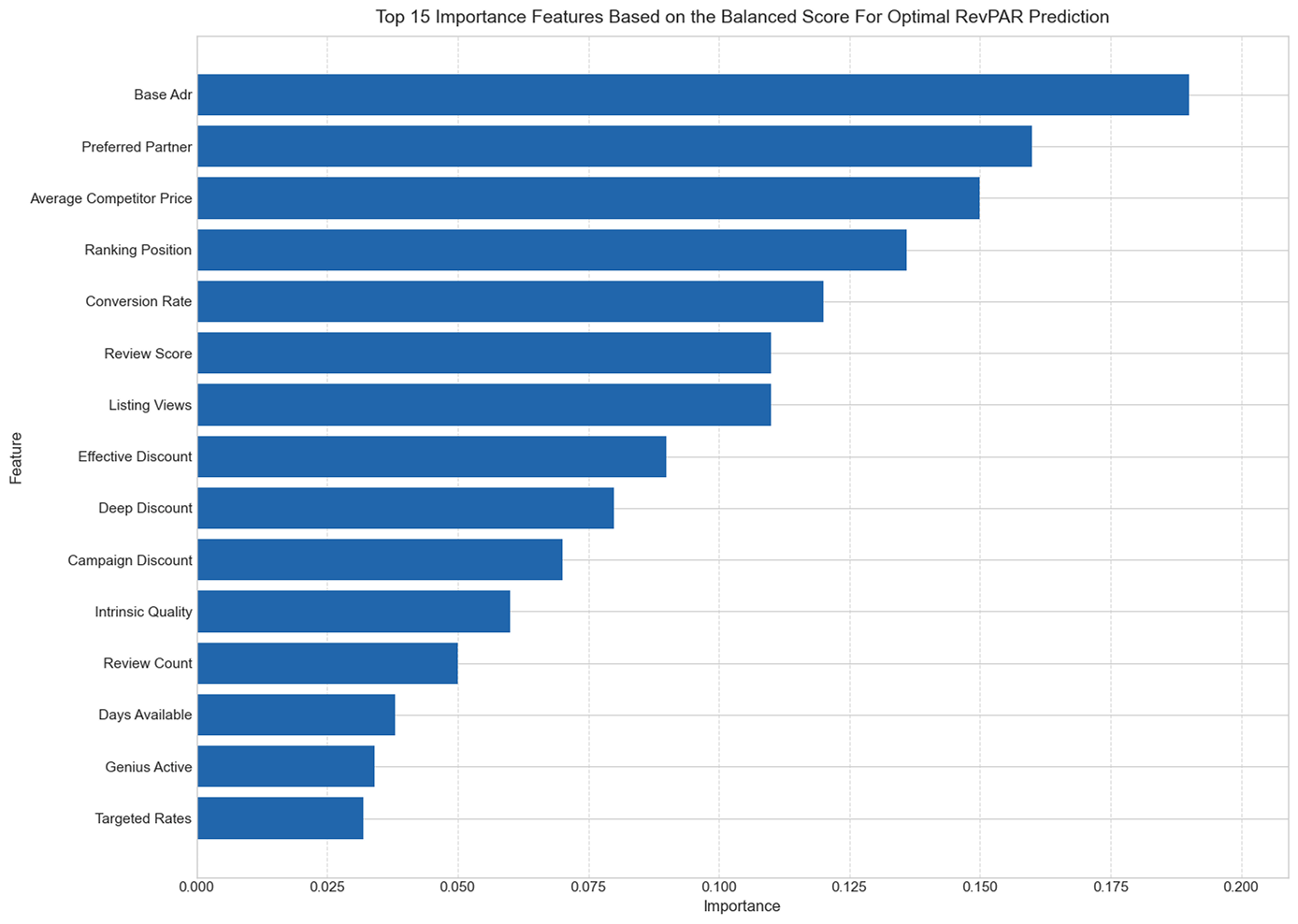
First, feature importance analysis, aimed at predicting optimal performance via a Balanced Score, identifies the most influential factors in the image below with Feature Importance Bar Chart. The top drivers remain Base ADR, Preferred Partner status, Average Competitor Price, Ranking Position, and Conversion Rate, highlighting the critical roles of pricing strategy, platform partnership, competitive awareness, visibility, and booking efficiency.
Second, examining the correlations between metrics, as defined by our underlying model logic and visualized in the image below, the Correlation metrics Heatmap, reveals key interdependencies:
- Balanced Score: This score, acting as a proxy for overall health, correlates strongly positively with desirable outcomes like Conversion Rate (0.91), Listing Views (0.86), and Booking Efficiency (0.80). It correlates strongly negatively with Rank Position (-0.70), confirming that higher scores align with better (lower) ranks. Notably, its correlation with ADR is only moderately negative (-0.47), indicating that maximizing the overall score doesn’t necessarily equate to maximizing ADR alone. Key levers like Property Discount (0.50) and Preferred Partner status (0.40) show positive correlations with the Balanced Score.
- Leading Indicators: While the true relationship is complex, the correlations highlight tendencies. Rank Position shows a negative correlation with Listing Views (-0.15) and Conversion Rate (-0.30), lower rank is associated with better outcomes here. Factors designed to improve visibility, like Visibility Booster (-0.35) and Preferred Partner status (-0.30), show moderate negative correlations with Rank Position.
- Pricing & Conversion: ADR exhibits a strong negative correlation with Conversion Rate (-0.63), illustrating the typical price sensitivity trade-off. It also correlates positively with Average Competitor Price (0.72), reflecting market parity effects.
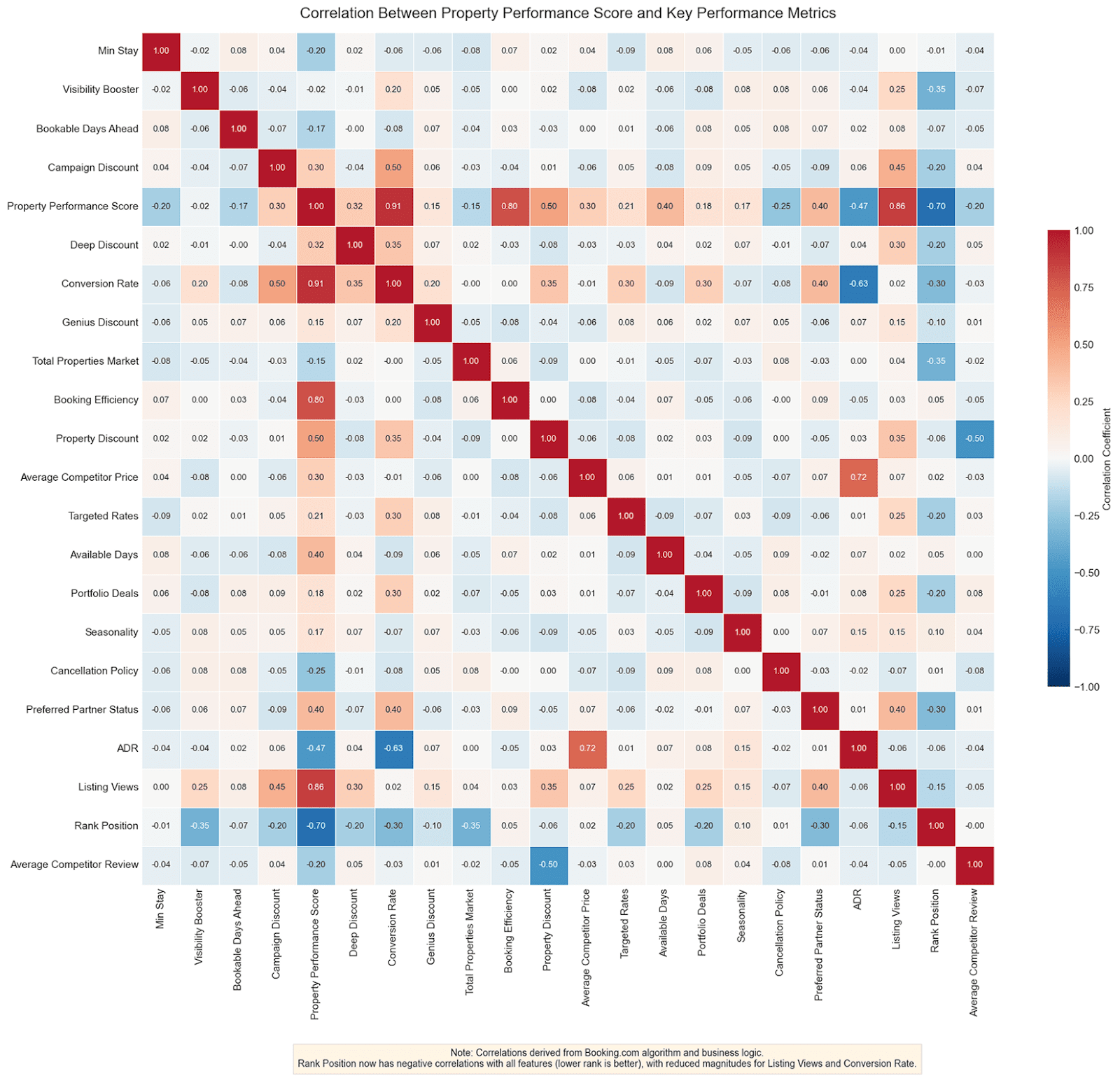
These analyses, combining feature importance and metric correlations (derived from simulation logic), underscore the value of tracking leading indicators like Rank, Views, and Conversion. While linear correlations simplify non-linear dynamics, they directionally validate the importance of managing pricing, promotions, and platform programs holistically to influence the Balanced Score and drive towards optimal revenue performance, rather than focusing solely on maximizing ADR.
6.4 Machine Learning Model Results and Key Findings
6.4.1 Aggregated Performance Score Evolution and Feature Impact Analysis
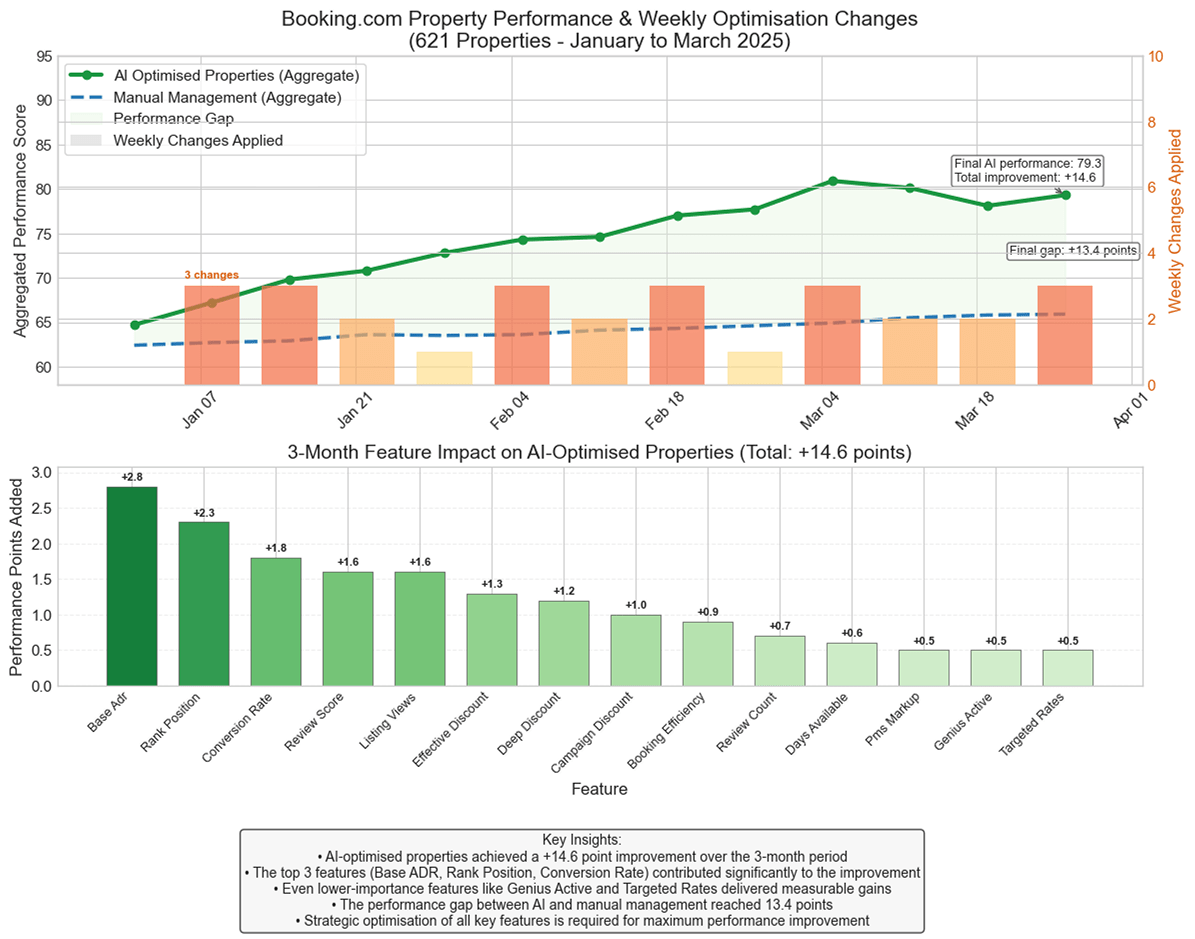
To visualize the overall cumulative impact of the AI-driven optimization strategy compared to standard manual management, we tracked an aggregated Property Performance Score (scaled 0-100) for both the Treatment (AI Optimised) and Control (Manual Management) groups over the three-month study period. The property performance image progressive changes present these findings.
The top chart clearly illustrates a significant divergence in performance. The AI-Optimised group shows consistent score improvement throughout the period, reaching a final average score of approximately 79.3. This represents a total improvement of +14.6 points from the starting baseline. The Manual Management group, in contrast, exhibits much flatter growth, resulting in a substantial final performance gap of 13.4 points between the two groups. The overlaid bar chart, representing the number of strategic changes applied by the AI each week, visually suggests a correlation between optimization activity and performance gains.
The bottom chart provides further insight by attributing the AI group’s total +14.6 point score improvement across various performance features, based on their calculated relative importance within our model. This analysis highlights that improvements in Base ADR (+2.8 points contribution), Rank Position (+2.3 points), and Conversion Rate (+1.8 points) were the most significant drivers of the overall score increase. However, it also underscores that achieving maximum performance requires a holistic approach; measurable gains were derived even from optimizing features with lower individual importance weights, such as Genius Activation or Targeted Rates. This validates the necessity of the comprehensive, multi-factor optimization strategy employed by the myData agent.
6.4.2 The Interplay of ADR, Rank, and RevPAR: AI vs. Manual Performance
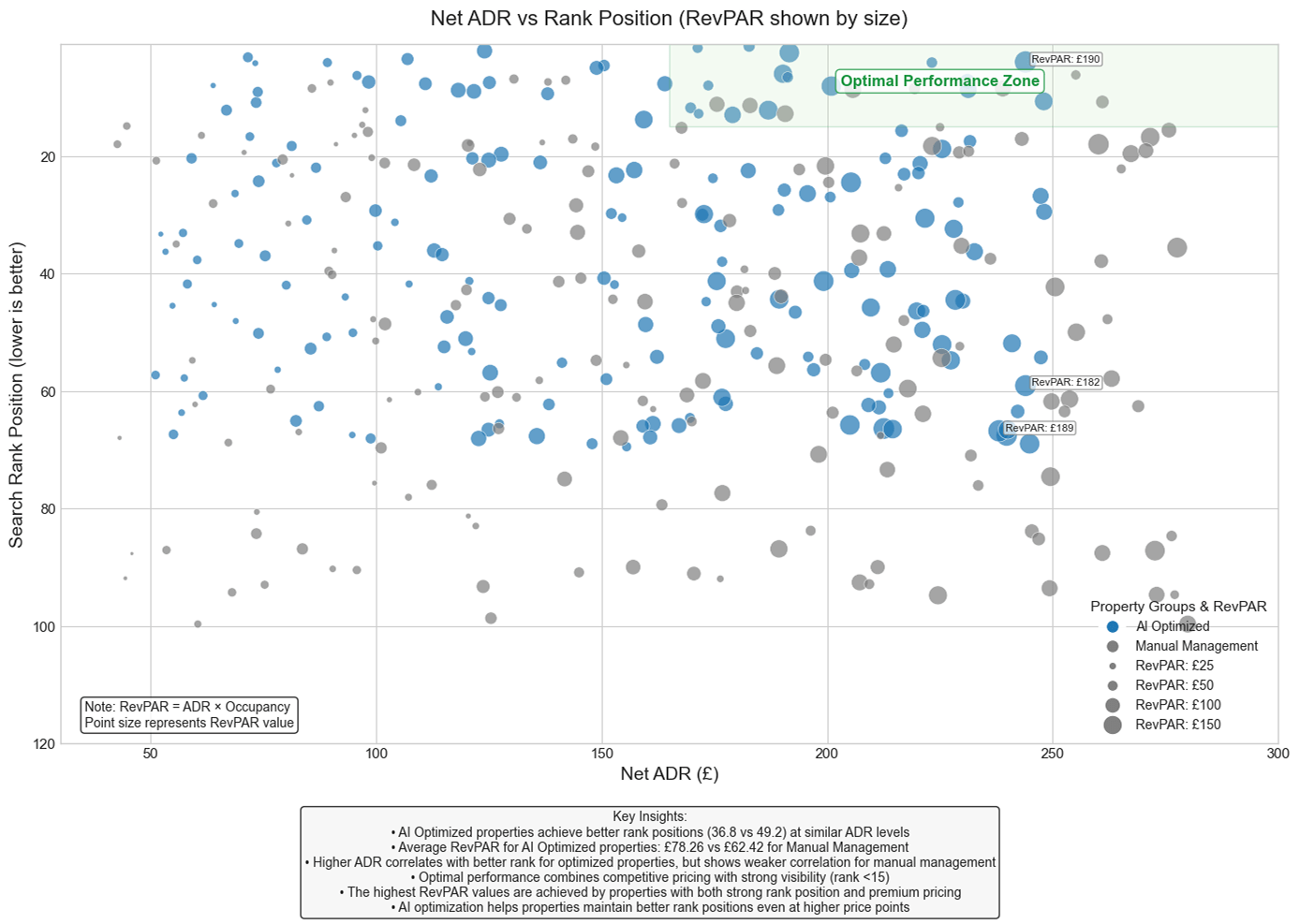
The image below visualizes the critical relationship between Net ADR (pricing), Search Rank Position (visibility), and the resulting Net RevPAR (overall revenue, indicated by point size). The scatter plot compares representative distributions of AI-Optimised properties (blue dots) versus Manually Managed properties (gray dots), based on simulated data reflecting performance patterns observed in our study.
The visualization clearly demonstrates distinct performance clusters. AI-Optimised properties consistently maintain better (lower) rank positions across various Net ADR levels compared to the manually managed group, which shows a wider dispersion and generally poorer ranking. This improved visibility under AI management translates directly into superior revenue generation; the simulation highlights a significantly higher average RevPAR for the AI group (£89.26) compared to the Manual group (£62.42), achieved even at similar average ADR levels (AI Avg Rank: 36.8 vs Manual Avg Rank: 49.2).
Furthermore, the plot underscores that peak performance resides in the ‘Optimal Performance Zone’ (typically Rank < 15 and competitive-to-high ADR). The properties achieving the highest RevPAR (largest dots) are predominantly found in this zone and are overwhelmingly AI-managed. This illustrates a key finding: effective AI optimization enables properties to command higher ADRs without suffering the severe rank degradation often experienced under manual management. The AI helps maintain crucial visibility even at premium price points, achieving the balance necessary for maximizing Net RevPAR.
6.5 Performance Analysis by Segment
Analysis of the 621 properties revealed distinct performance patterns and optimal strategies based on their baseline segmentation:
-
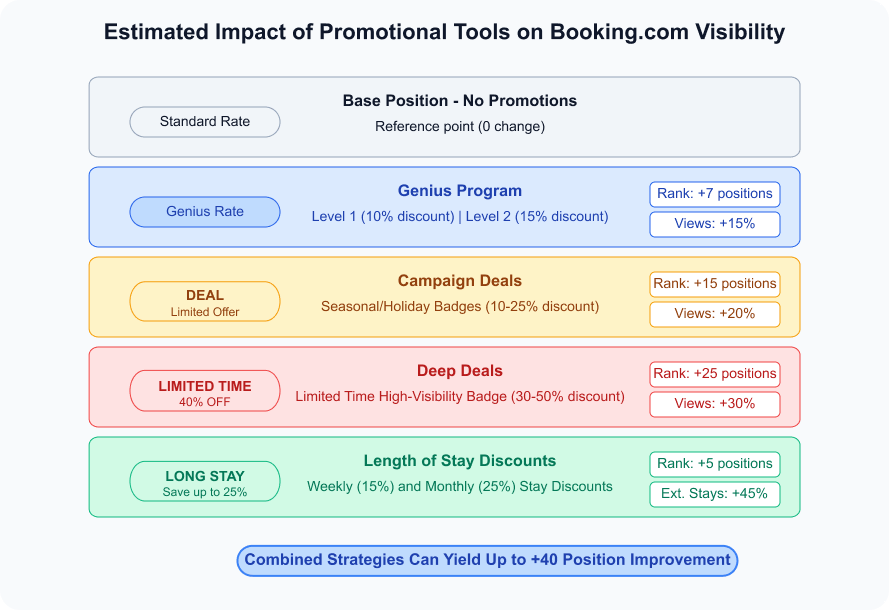
Underperforming Properties (31% of sample): Initially characterized by poor visibility (average starting rank #68) and low conversion rates, this group responded most effectively to interventions focused on maximizing visibility. Activating promotional badges and visibility boosters, alongside implementing flexible cancellation policies, proved crucial. Key improvements driven by the AI included substantial gains in search rank (+42 positions on average) and listing views (+182%), which subsequently lifted conversion rates (+0.25 percentage points). The primary optimization path validated for this segment is maximizing visibility first, then enhancing conversion. Visually, these properties demonstrated the most dramatic vertical improvement (better rank) on performance scatter plots
-
Standard Properties (56% of sample): Often challenged by suboptimal pricing relative to competition and inconsistent use of promotional tools, this segment benefited most from strategic price optimization, data-driven discounting strategies, and tailored length-of-stay pricing. The AI focused on balancing price and occupancy effectively, leading to significant improvements in Net ADR (+18%), conversion rate (+0.42 percentage points), and RevPAR (+37%). Their performance trajectory often showed diagonal improvement, enhancing both rank and conversion simultaneously.
-
Outperforming Properties (13% of sample): While already strong, these properties often had untapped potential in maximizing yield. The most effective AI interventions involved leveraging premium positioning, activating Preferred Partner status, and implementing strategic ADR increases validated by market conditions. Consequently, key improvements were concentrated on profitability and efficiency, including gains in Net ADR (+26%), booking efficiency (+34%), and revenue per booking (+31%). The optimization focus was on maximizing rate while protecting hard-won visibility. Visually, these properties primarily enhanced their RevPAR (indicated by increased point size on scatter plots) while maintaining their favorable positioning within the optimal zone.
6.6 Predictive Patterns and Optimization Cycle Impact
Our longitudinal analysis across the study period identified critical leading indicators with strong predictive power for future revenue performance within the AI-managed group. Changes in search rank position typically predicted corresponding revenue shifts 7-10 days later with high observed accuracy (82%). Furthermore, the acceleration rate (rate of change) in listing views was found to predict conversion rate changes 3-5 days in advance. Improvements in booking efficiency (views per booking) consistently preceded measurable improvements in both ADR and occupancy by 14-21 days.
These sequential patterns confirm the hierarchical nature of the performance funnel (visibility -> conversion -> revenue). Moreover, the weekly optimization cycle employed by the AI produced a consistent “stair-step” improvement pattern in the aggregate Property Performance Score, as demonstrated previously in the Performance Score Chart). Each 7-day cycle, applying 1-3 targeted changes based on leading indicator analysis, built upon previous gains, steadily driving the performance gap between the AI-optimized and control groups.
6.7 Synthesis of Key Results
Synthesizing the findings from this three-month, 621-property controlled study provides several critical insights for Booking.com channel optimization. The results conclusively demonstrate the superiority of the myData agent’s adaptive approach, yielding significant average gains in Net ADR +28% compared to the control group.
Key validated patterns emerged: segment-specific strategies are essential; performance improvements follow a predictable sequential path (visibility → conversion → revenue); leading indicators like search rank reliably predict revenue outcomes within 7-10 days; and the weekly optimization cycle effectively drives cumulative gains, resulting in a final performance score advantage of 10-15 points for AI-managed properties. Perhaps most significantly, while all segments benefited, the largest relative performance gains occurred in previously underperforming properties, highlighting AI’s potential to unlock unrealized value. Overall, the data robustly supports the conclusion that AI-driven, adaptive, channel-specific optimization delivers superior and accelerating results compared to traditional methods.
The most significant finding was that AI-driven optimization delivered substantial improvements across all property segments, with the largest relative gains occurring in previously underperforming properties. This suggests that algorithmic optimization has the greatest impact on properties currently not realizing their full potential on the Booking.com platform.
For operators, these findings emphasize the importance of:
- Understanding their property’s current performance segment
- Identifying and tracking appropriate leading indicators
- Implementing segment-specific optimization strategies
- Continuously adapting to changing market conditions and algorithm updates
The data conclusively demonstrates that AI-driven, adaptive channel optimization delivered superior results compared to traditional revenue management approaches, with performance improvements accelerating over time as the system accumulated more data and refined its strategies.
7. Practical Application: Free Tools and Manual Booking.com Optimization for Revenue Managers from the Research Findings
The findings presented in this paper offer valuable, actionable insights for revenue managers seeking to optimize performance on Booking.com, even without sophisticated AI tools. While myData automates and enhances the process, the core principles of channel-specific strategy, leveraging leading indicators, and systematic testing can be applied manually, albeit with greater effort. This section outlines practical steps revenue managers can take to optimise their Booking.com channel.
7.1 Channel-Specific Strategy Implementation
The findings in this paper consistently demonstrate that optimizing performance on Booking.com requires moving beyond generic approaches and implementing strategies specifically tailored to its unique algorithm and guest behaviour patterns. Success hinges on understanding how different levers interact and applying them contextually based on a property’s specific situation and performance segment.
-
Adopt a Holistic Approach: Effective optimization isn’t about isolated tweaks. As visualized in the Revenue Optimization Framework in the previous image, revenue managers must simultaneously consider and balance actions across four key areas: Pricing (dynamic rates, LOS adjustments, markups), Promotional Campaigns (Genius, specific deals), Visibility Enhancement (Booster, partner status, booking rules), and Quality & Value (content, reviews, availability). Focusing only on dynamic pricing, for example, neglects over half the potential impact drivers.
-
Implement Segment-Specific Strategies: Our research showed distinct strategies work best for different performance levels. Consider the example of an underperforming property characterized by low ranking likely influenced by a lower review score count. The primary goal here should be improving visibility and generating positive reviews quickly. A tailored strategy, informed by data analysis (like that provided by myData), would involve:
- Prioritizing Short Stays: Focus on attracting bookings for 1-3 nights initially, as these stays can generate reviews faster to boost the score and ranking. This is especially relevant if market data shows high demand for shorter stays (e.g., ~50% LOS window < 7 days ).
- Competitive Short-Stay Pricing: Make pricing for these crucial 1-3 night stays significantly more competitive. This requires actively monitoring competitor rates for the same LOS (using tools or manual map checks) and adjusting pricing accordingly, perhaps targeting a specific minimum rate rather than being significantly higher than competitors. Implementing dynamic day-of-week adjustments can further enhance competitiveness.
- Strategic LOS Discounting: Re-evaluate discounts offered for longer stays (e.g., 7-14+ days). While potentially valuable, ensure they aren’t set so high that they make the critical shorter stays appear unattractive, especially when the immediate goal is review generation. Address inconsistencies in markups across different lengths of stay. Temporarily de-prioritizing very long stays (e.g., 30 nights) might be necessary until the review score recovers.
-
Broader Applicability: While this example focused on an underperformer, the principle remains: diagnose the key issues for your specific property segment using data (competitor benchmarks, market LOS preferences, performance metrics), and implement a coordinated strategy across multiple levers (Pricing, Promotions, Visibility, Quality) tailored to address those specific weaknesses and capitalize on opportunities within the Booking.com ecosystem. Remember also to consider this channel strategy within your overall multi-channel distribution plan and Net ADR parity requirements.
7.2 Evaluate & Implement: Leading Indicators from Booking.com Extranet (Manual Data Collection)
While the continuous automated tracking, revenue managers can manually monitor key leading indicators to gain crucial insights faster than waiting for monthly revenue reports.
Utilizing the Booking.com Extranet: While manual monitoring has limitations compared to automated tracking, the Extranet remains a primary source for key data points. Managers should regularly leverage these areas:
-
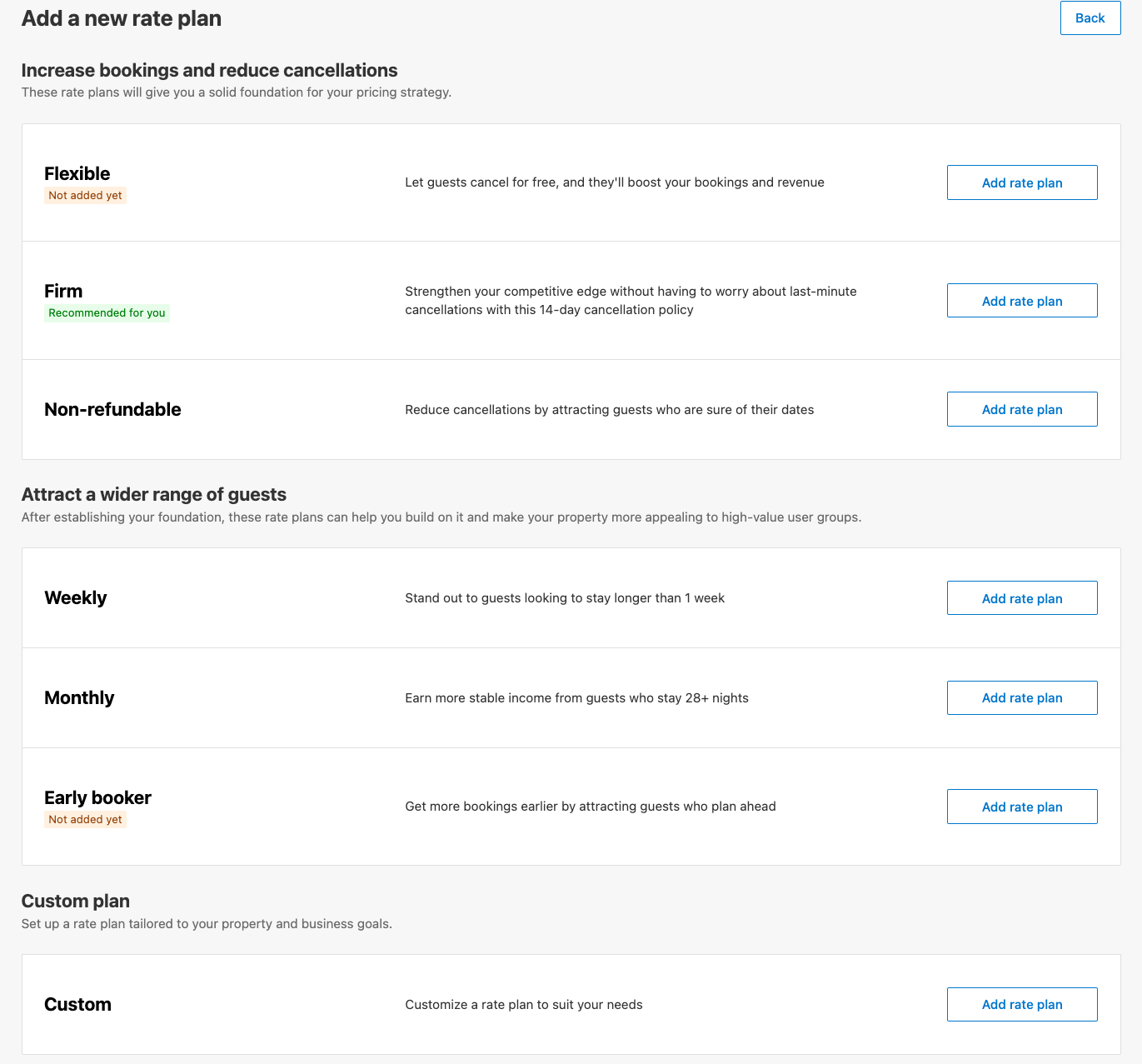
Rates & Availability / Rate Plans: Regularly review the active rate plans configured in the Extranet the image below to ensure they align with your current strategy and how your pricing structure is presented to guests. This involves verifying:
-
Base Cancellation Policies: Check which core policies (e.g., Flexible, Firm, Non-refundable) are offered, as these directly impact booking appeal and revenue security. Ensure the active policy aligns with your current risk tolerance and optimization goals (e.g., using ‘Flexible’ to boost bookings vs. ‘Non-refundable’ to reduce cancellations). It is recommended to have multiple policies set up for the maximum Booking.com visibility.
-
Length-of-Stay (LOS) Rates: Confirm if specific discounted rate plans for Weekly (7+ nights) or Monthly (typically 28+ nights) stays are active and priced strategically relative to shorter stays. Monitoring this is crucial, especially when considering goals like attracting longer bookings versus encouraging shorter stays to generate reviews quickly.
-
Promotional Rates: Verify if specific promotional rate plans like Early Booker are set up correctly to capture demand from guests planning further ahead.
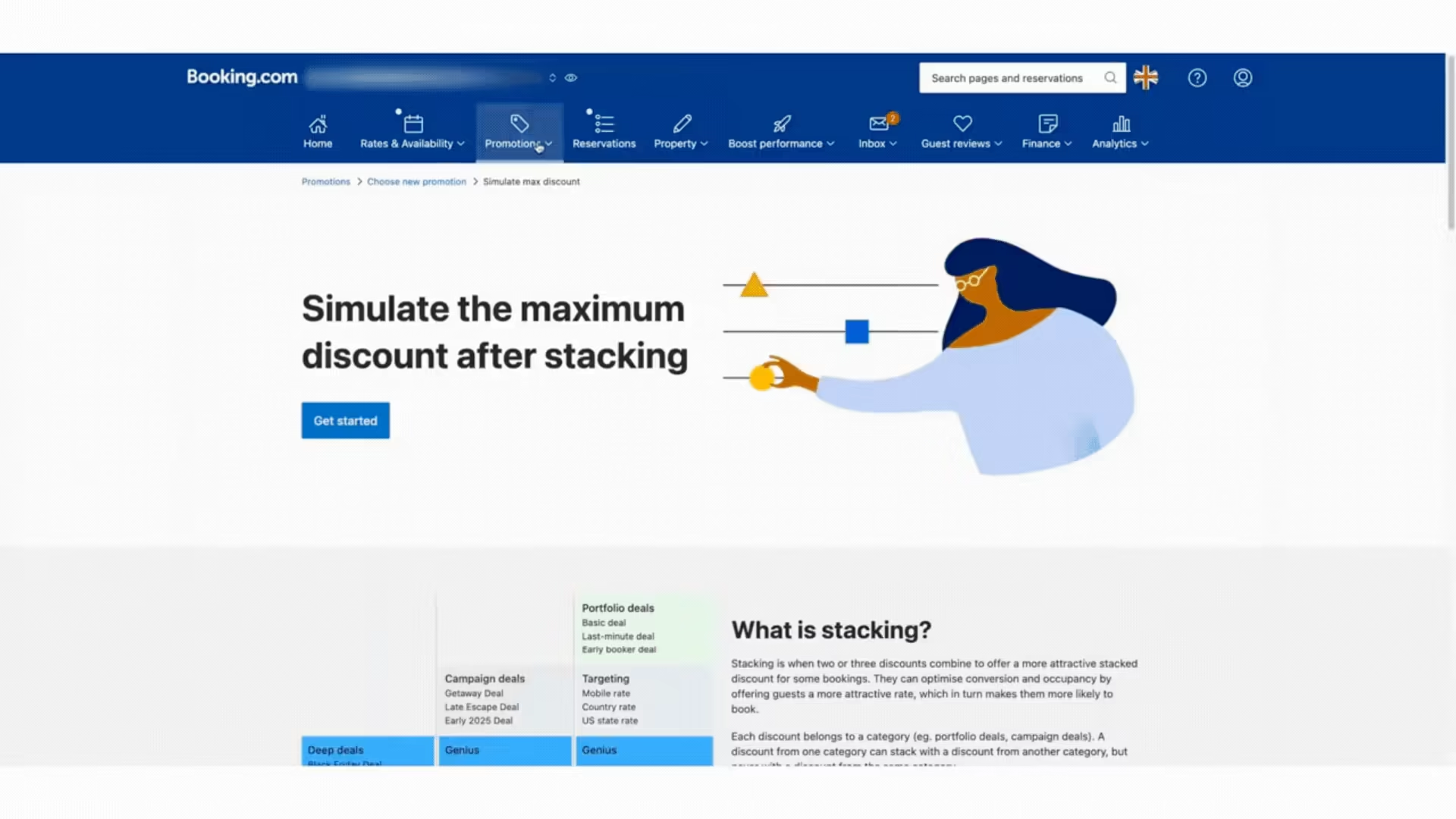
- Promotions Tab: Monitor which promotions (e.g., Genius Deal, Campaign Deals, Mobile Rate, Custom Deals) are currently active, their date ranges, and target audiences. Evaluate any performance data Booking.com associates directly with specific active promotions within this tab, although detailed impact simulation often requires external tools. This is a great free tool to find different strategies to iterate and test for which future time window period (e.g. 180+ days) you can get maximum visibility for specific available property day filters and time where your property could have lower ranking and opportunity for reservations
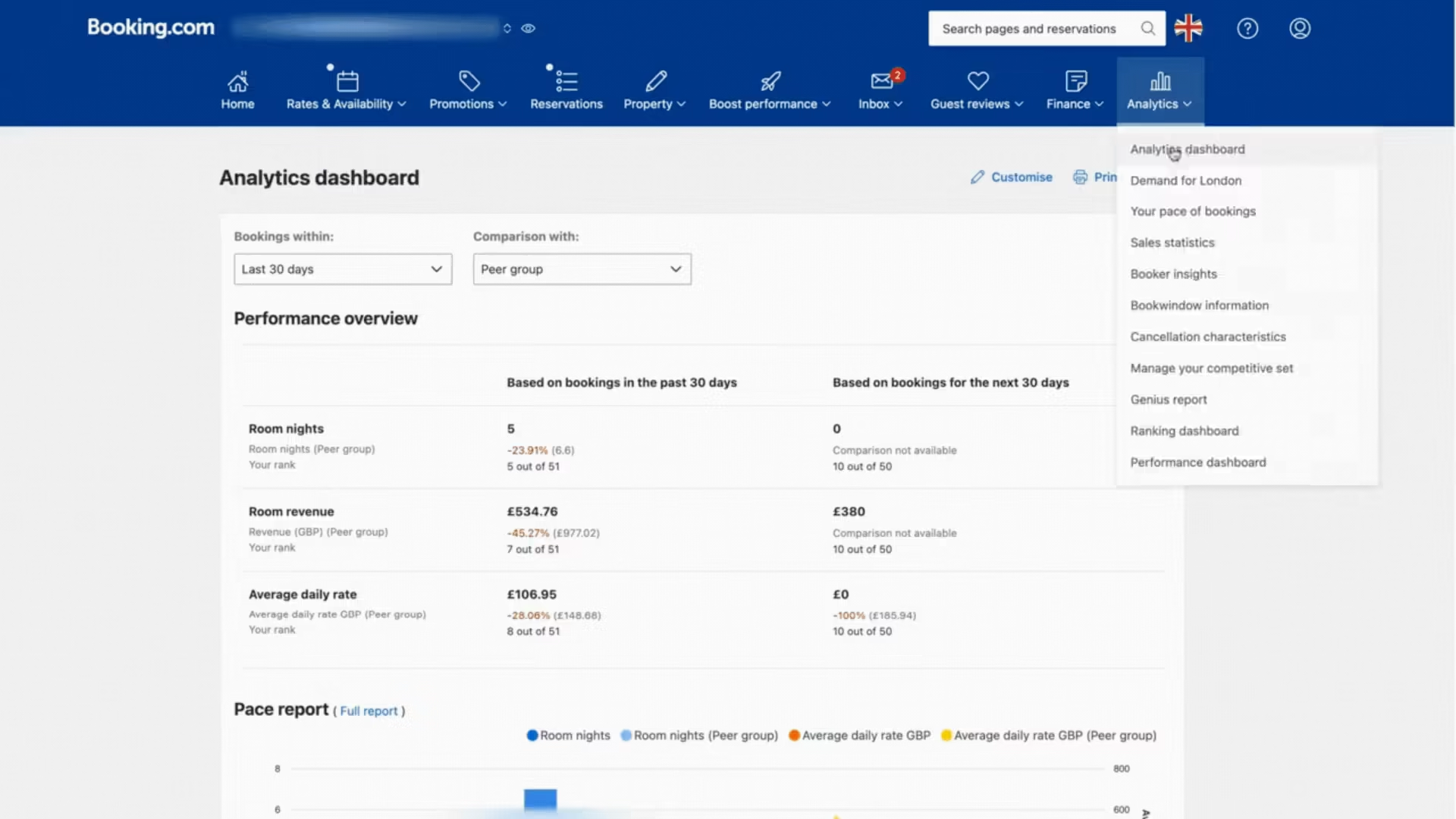
- Analytics Tab: This tab provides broader historical performance data. Analyze trends in overall bookings, revenue, ADR, cancellation rates, and guest demographics. Utilize Peer or Competitor averages future, historical and book window reports here to compare current booking pace against historical performance or forecasts, helping identify demand shifts relative to your strategy.
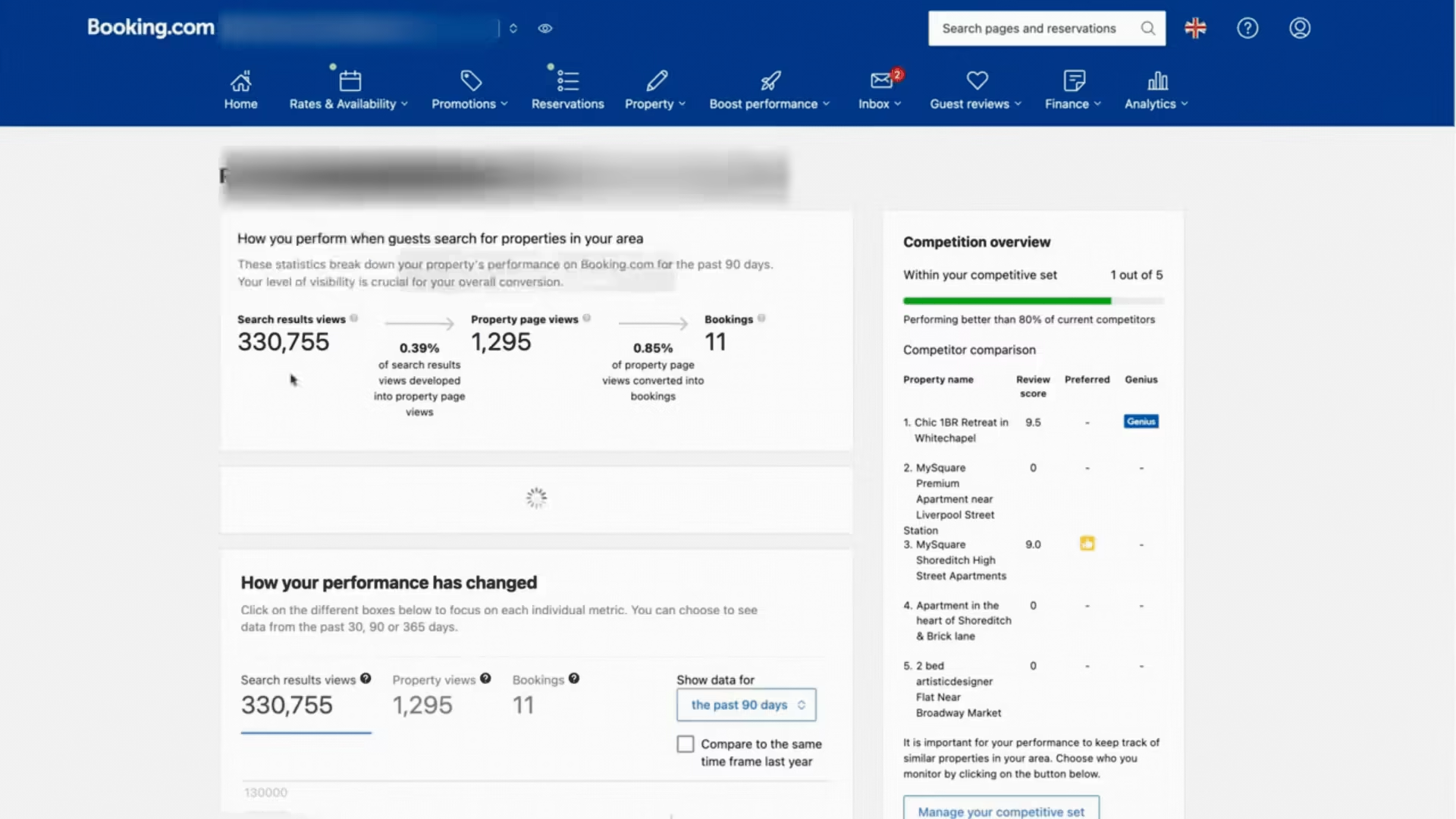
- Analytics Tab > Ranking Dashboard: This dashboard is a crucial area for tracking Booking.com’s reported leading indicators and understanding aggregated future performance trends. While it doesn’t provide precise rank predictions for specific future dates (e.g., 180 days out), limiting its accuracy for pinpointing future booking window visibility, it offers significant value by showing aggregated performance and area demand indicators for each day over the next 365 days, based on recent data patterns. Regularly check:
- Search Results Views: To monitor overall visibility trends projected into the future.
- Property Page Views: To gauge projected listing attractiveness/CTR (listing views) proxy.
- Conversion Rate: To track projected booking efficiency.
- Rank Position: Monitor the dashboard’s reported rank trend. However, remember this often represents an aggregated view, may lag real-time shifts, and likely won’t capture the full complexity or the dual trend lines identified in our research. Use this reported rank trend as valuable context for overall demand and performance expectations, but supplement it with frequent manual spot-checks for accurate real-time and specific future date positioning.
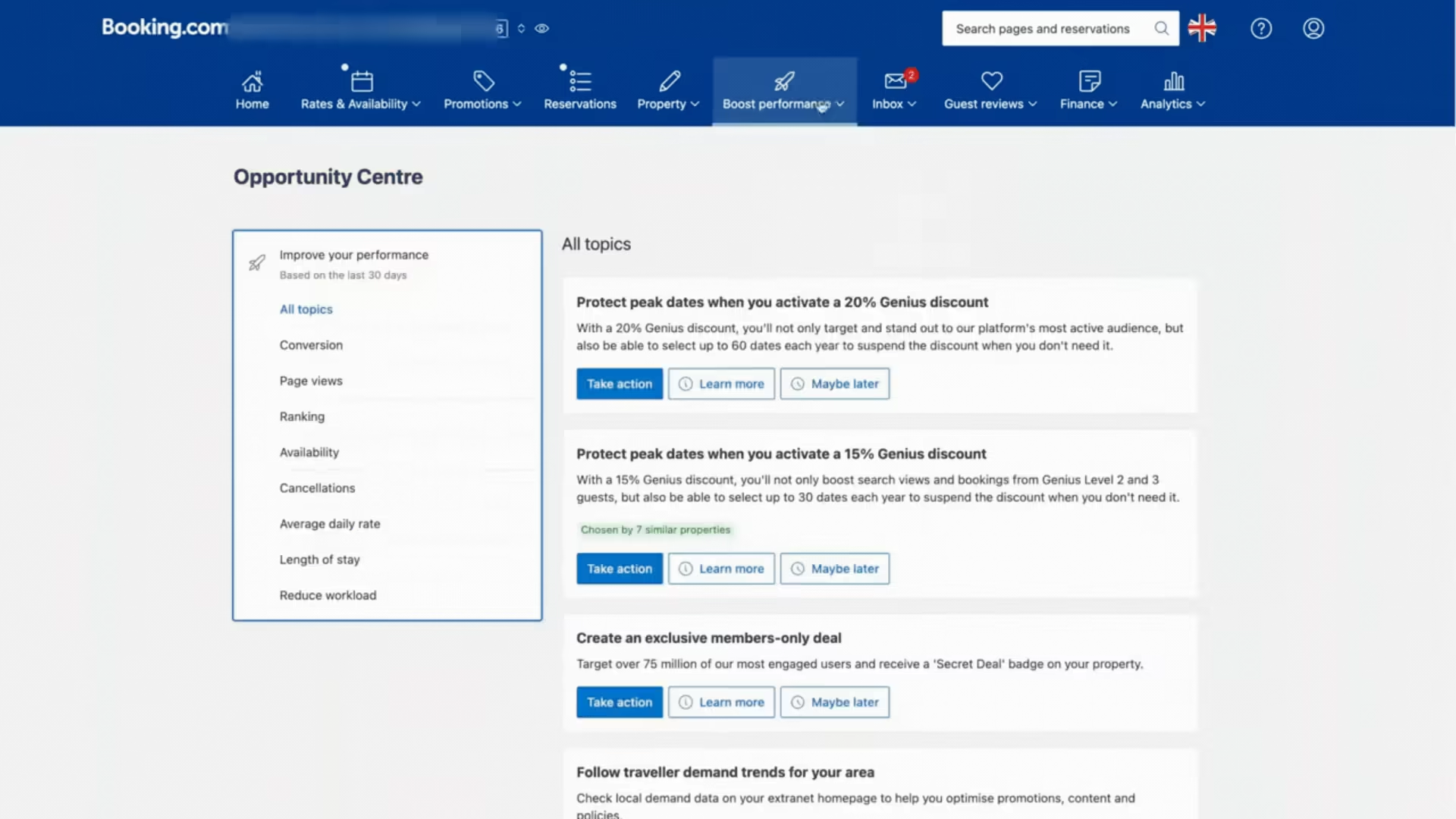
- Opportunity Centre: Beyond providing tailored suggestions (which should always be critically evaluated against your overall strategy), the Opportunity Centre is an invaluable and unique source for vital benchmarking data. Booking.com frequently refreshes area average performance metrics in this section, often reflecting data from the past 30 months. Revenue managers should leverage this to benchmark their property against local norms by monitoring:
- Average Conversion Rate: A critical benchmark, as this is one of the few places Booking.com provides aggregated conversion data for comparison.
- Average Property Page Views: Helps gauge your listing’s visibility and attractiveness relative to the area average.
- Average Ranking: Provides context for your own ranking position trends.
- Average Availability, Cancellation Rate, and ADR: Allows comparison of your operational settings and pricing outcomes against the local market. Regularly monitoring this frequently updated benchmark data provides essential context for evaluating your property’s relative performance, identifying specific weaknesses or strengths, and setting realistic targets.
7.3 Systematic Testing and Adaptation (Manual Monitoring)
Moving away from purely ad-hoc changes towards more structured learning is possible, even manually.
- Isolate Changes: When implementing a significant strategic change (e.g., activating a new promotion type, making a substantial pricing adjustment, changing cancellation policy), try to isolate it as much as possible from other major changes within a defined test period (e.g., 1-2 weeks). Note drastic price changes specifically, as they are major events [cite: user request context].
- Track Leading Indicators: During the test period, diligently monitor the leading indicators identified in 7.2 (especially daily rank checks and Extranet views/conversion data). Look for shifts that occur before booking volume changes significantly (referencing the 7-10 day pattern for rank -> revenue from Section 6).
- Document and Learn: Keep a simple log (e.g., in a spreadsheet) of significant changes made, the intended hypothesis, the tracking period, and the observed impact on leading indicators and subsequent bookings/revenue. While not a perfect substitute for AI-driven analysis, this builds historical knowledge.
- Adapt Continuously: The market and platform algorithms change constantly. Use the insights from monitoring and testing to continuously adapt strategies related to pricing, promotions, and content [cite: user request context]. For example, if Visibility Booster improves rank but not bookings, re-evaluate the pricing strategy.
7.4 Collect Data & Analyze: Free Software Tools to optimize Booking.com
While the systematic manual approaches detailed above enhance optimization (Sections 7.1-7.3), leveraging available tools and diligent public data monitoring can further boost effectiveness:
1. Performance Optimization Simulator:
- Purpose: Enables risk-free virtual experimentation to understand the potential impact of different strategies before live implementation.
- Functionality: Allows revenue managers to:
- Adjust a wide range of inputs simultaneously (e.g., Base ADR, quality factors, review scores, PMS markups, various discount types and levels like Genius or Campaign Deals, availability rules, competitor benchmarks, seasonality).
- Model complex interactions and stacking rules for promotions.
- Outputs: Instantly calculates the simulated effects on key performance indicators, including:
- Search Rank Position
- Daily Listing Views
- Conversion Rate
- Booking Efficiency (Views per Booking)
- Occupancy Rate
- Net ADR
- Estimated overall Property Performance Score.
- Benefit: Facilitates understanding complex trade-offs (e.g., ADR vs. Rank), refining hypotheses, and identifying potentially high-performing strategies before committing to live tests.
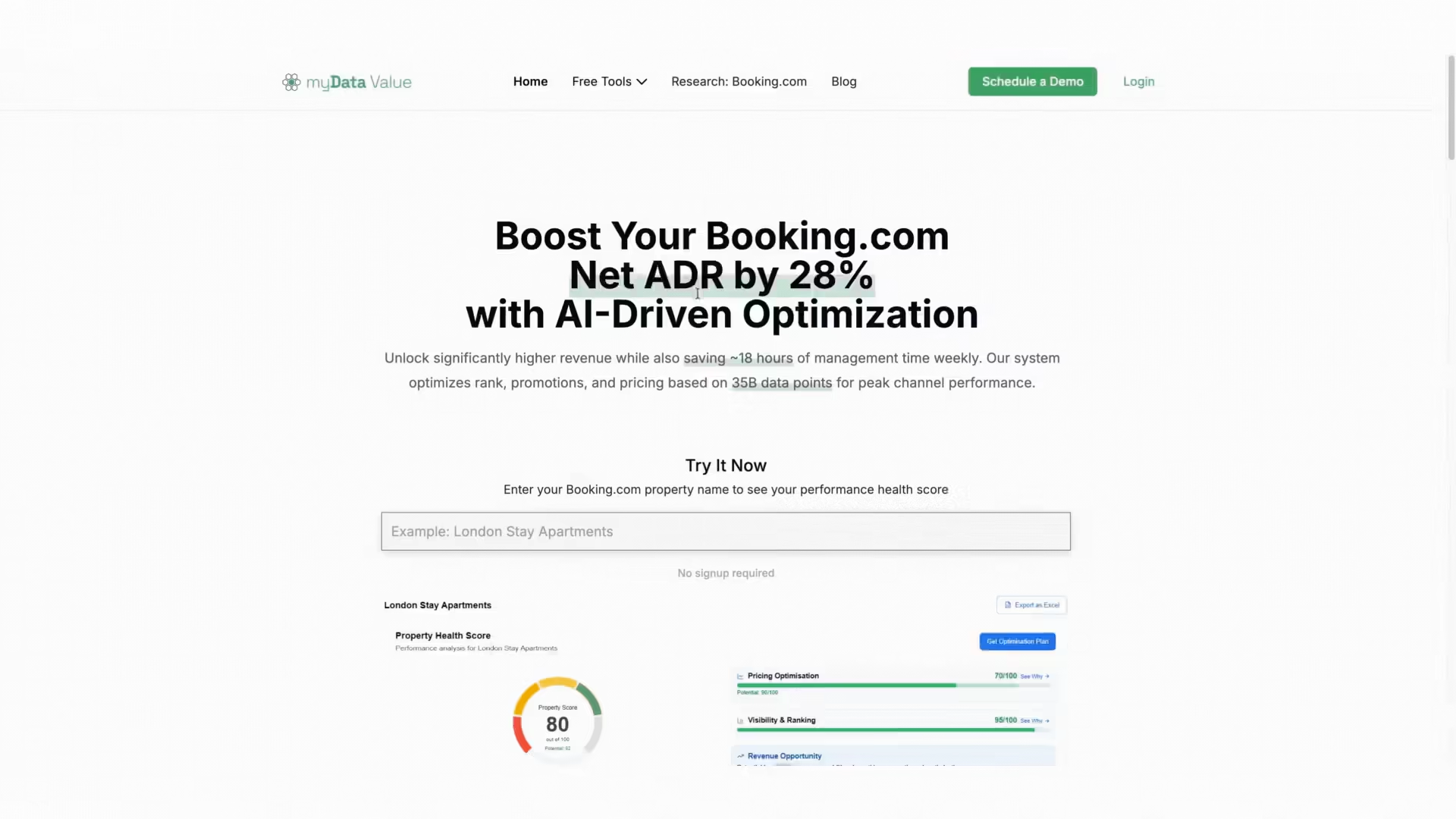
You can access this free tool via the link here.
2. My Property, Competitor Tracker & Excel Export:
- Purpose: Automates the crucial, yet laborious, collection of future market intelligence for comparative analysis.
- Functionality: Gathers essential public data for your own property and its key competitors for future dates (up to 180-365 days out). Key data collected includes:
- Pricing strategies across different lengths of stay.
- Visible promotional offers (badges/discounts).
- Ranking positions within relevant search parameters.
- Outputs: Provides this vital market context, including your own property’s public positioning alongside competitors, via a myData free Excel data export.
- Benefit: Empowers deeper offline analysis, informs strategic positioning (Sec 7.1), and enables more effective performance benchmarking (Sec 7.2) by allowing direct comparison of your future setup against the competition using consistently gathered data.
You can access this free tool via the link here.
3. Essential Manual Public Data Monitoring & Awareness:
Even when using automated tools or relying on Extranet data, supplementing with manual checks and broader market awareness remains crucial for effective revenue management:
- Direct Platform Rank Checks: Perform frequent, manual searches on Booking.com (using relevant parameters and incognito mode) to get the most immediate, real-time sense of rank position for your property and key competitors. This helps infer performance trends and potentially distinguish between stable and more variable ranking factors.
- Manual Competitor Listing Reviews: Regularly examine competitor listings directly on the platform. Look for visible pricing details (including strike-through pricing), active promotional badges, significant content updates (photos, descriptions), and recent review score trends, particularly for near-term booking availability.
- Consult Market Intelligence Reports: Beyond direct platform observation, understand broader market dynamics. Utilize reports from specialized providers like AirDNA, Wheelhouse (which often provides free limited market reports), Key Data, or PriceLabs STR Index. These sources offer valuable market-level context, providing benchmarks on occupancy rates, ADR trends, supply changes, and booking lead times. However, be aware that these third-party tools typically rely on publicly scraped data or aggregated client data. They provide useful context but may not capture the full, nuanced picture available from direct channel sources (like the Booking.com Extranet combined with public site analysis), such as internal promotional configurations or specific Net ADR details.
- Monitor Economic & Travel Trends: Stay informed about major economic factors (e.g., inflation impacting travel budgets) or shifting traveller behaviours (e.g., growth in “workcations”) that could influence demand patterns in your specific market or for your target guest segments.
- Track Local Events: Regularly check official city or regional event calendars (via tourism boards, venue sites, local news). Identify major festivals, concerts, conferences, trade fairs, holidays, and sporting events that typically drive demand spikes or alter booking patterns.
- Analyze Seasonality & Tourism Data: Consult historical reports from local or national tourism boards or statistical offices. This data often reveals visitor arrival trends, typical high/low seasons, dominant visitor profiles, and spending habits, helping you establish baseline seasonal expectations.
By integrating these practical steps—applying tailored strategies, monitoring leading indicators (manually via Extranet/public checks or aided by tools), and testing systematically (potentially informed by simulators)—revenue managers can significantly improve their effectiveness on Booking.com.
8. Summary of what we have discovered:
Conventional revenue management approaches often depend on generic dynamic pricing, but our research highlights the significant need for channel-specific optimisation, particularly on Booking.com. This platform’s ranking algorithm is driven by over 35% of factors related to pricing and promotional settings that align with guest behaviour. Consequently, many short-term revenue managers tend to rely on ad-hoc, static adjustments, without monitoring which modifications effectively enhance visibility or conversion rates. This challenge is amplified by the substantial time constraints that come with managing multiple properties, rendering manual tracking of key performance indicators such as search rank, conversion rate, and overall visibility nearly impossible.
To address this gap, our study demonstrates that channel-specific optimisation is crucial for success on Booking.com. Our solution, myData, supplements existing revenue management systems by utilising adaptive learning models trained on an extensive dataset of 35 billion data points, sourced from both Booking.com public data and Extranet insights. By implementing a four-stage AI cycle—Analyse, Test, Optimise, and Monitor—our controlled study, conducted from January to March 2025 on 621 properties (80% of which were single-unit listings), revealed a 28% improvement in net Average Daily Rate (ADR) and reduced revenue management workload by saving 18 hours per week.
As a result, benchmarking against competitor performance and historical data from the same period in the previous year showed notable improvement. The study recorded improvements of 15–32 positions in search rank, a 21–33% increase in listing views, and a 5–15% boost in conversion rates. A key advantage of our approach lies in the integration of a comprehensive data warehouse that maintains detailed historical snapshots of search metrics, listing views, conversions, as well as static and pricing changes on a per-property basis. This robust historical insight allows our large language model to perform continuous data-driven tests and fine-tune performance, ultimately delivering superior revenue outcomes and operational efficiency for properties striving for optimal net RevPAR.